Introduction
The Tiji Festival (also known as “Tenchi”) is one of the most spectacular and spiritually significant festivals in Nepal, particularly in the mystical walled city of Lo-Manthang in the Upper Mustang region. Deeply rooted in Tibetan Buddhism, this festival symbolizes the victory of good over evil and is celebrated with great enthusiasm, traditional masked dances, and sacred rituals. What makes Tiji unique is its fusion of Buddhism and Tibetan Tantra, an esoteric form of Buddhism that emphasizes rituals, meditation, and mysticism.
This blog takes an in-depth journey into the Tiji Festival, its historical background, spiritual essence, rituals, cultural significance, and the profound blend of Buddhism and Tibetan Tantra.
The Historical and Mythological Origins of Tiji Festival
1. The Legend Behind Tiji
Tiji finds its origins in a sacred myth where a deity named Dorje Jono (or Vajra Kila in Sanskrit) battles his demon father, who was responsible for bringing chaos, drought, and destruction to Mustang. Through divine powers, Dorje Jono defeated the demon and restored peace and prosperity to the region. The festival is a re-enactment of this victory, signifying the removal of obstacles, suffering, and negative energies.
2. Influence of Tibetan Buddhism in Mustang
Mustang, historically part of the Tibetan Kingdom, has long been a hub of Tibetan Buddhism, especially of the Sakya and Nyingma sects. The Tiji Festival was introduced in the 17th century by the Sakya Buddhist master Ngawang Kunga Sonam to uphold Buddhist teachings and preserve cultural traditions. Over time, it evolved into a blend of Vajrayana Buddhist practices and Tibetan tantric rituals.
The Spiritual Essence: Buddhism Meets Tibetan Tantra
The Tiji Festival is more than a cultural event; it is a deeply spiritual ceremony influenced by Tibetan Buddhism’s Tantric (Vajrayana) traditions. Here’s how:
- Empowerment Rituals — Before the festival, monks undergo rigorous tantric empowerment rituals to channel spiritual energy.
- Mantra Chanting & Meditation — Monks chant ancient mantras and sutras to invoke divine blessings.
- Mudras and Mandalas — Complex hand gestures (mudras) and intricate sacred diagrams (mandalas) are used during rituals.
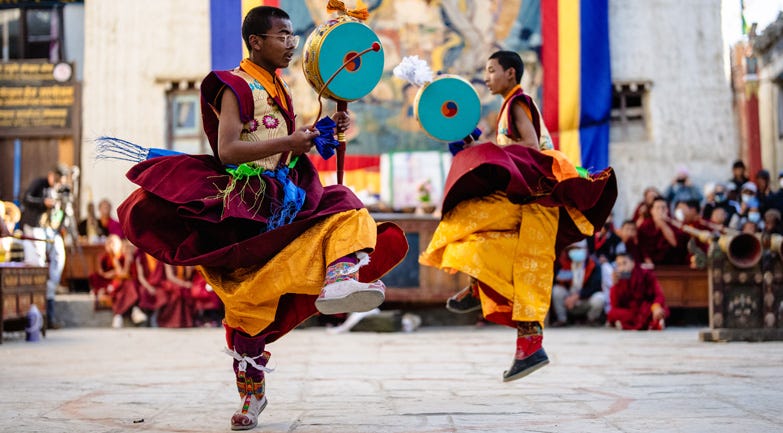
- Mystical Cham Dance — Performed by monks wearing sacred masks, the dance represents the subjugation of negative forces through tantric power.
- Symbolic Offerings — Fire offerings, ritualistic objects, and spiritual invocations are part of the tantric transformation process.
The blending of these Tantric Buddhist rituals with traditional celebrations makes Tiji unique, as it transcends ordinary religious observance to become a powerful spiritual cleansing event.
The Three-Day Celebration: Rituals and Events
Tiji is a three-day festival full of vibrant performances, spiritual ceremonies, and communal joy. Each day has its own significance:
Day 1: Invocation and the Beginning of Sacred Rituals
- The festival starts at the Chode Monastery in Lo-Manthang, where high lamas perform purification ceremonies.
- Monks recite ancient texts and invoke the deity Dorje Jono.
- The first phase of the sacred Cham dance is performed, where monks dressed in colorful costumes and masks depict divine figures.
Day 2: Confrontation Between Good and Evil
- The narrative intensifies as monks reenact Dorje Jono’s battle with the demon.
- The sacred Cham dance reaches its peak, displaying aggressive movements that symbolize the power of tantric transformation.
- Locals participate by offering prayers and chanting mantras to support the victory of good over evil.
Day 3: Victory and Expelling Evil
- The final performance showcases the ultimate defeat of the demon.
- A ritualistic effigy of the demon is symbolically destroyed to expel evil from the region.
- The festival concludes with fire offerings, communal feasting, and blessings from the lamas.
Cultural Significance: A Living Tradition of Mustang
1. Preserving Tibetan Culture
Since Mustang was once part of Tibet, the Tiji Festival is a living bridge to ancient Tibetan traditions. With the annexation of Tibet by China, Mustang remains one of the few places where authentic Tibetan Buddhist practices continue without interference.
2. Uniting the Local Community
Tiji is a social and cultural gathering where locals from different villages come together, dressed in their finest traditional attire. It strengthens communal bonds and fosters a shared identity.
3. A Pilgrimage for Spiritual Seekers
For many Buddhists and spiritual seekers worldwide, attending Tiji is akin to a sacred pilgrimage, offering blessings, healing, and enlightenment.
The Future of Tiji Festival in a Changing World
Despite modernization, the people of Mustang are dedicated to preserving their ancient traditions. However, challenges like climate change, economic shifts, and globalization pose risks to cultural heritage. Efforts by local monasteries, cultural organizations, and tourism initiatives are helping sustain the festival for future generations.
Conclusion: A Journey into the Heart of Tibetan Tantra and Buddhism
The Tiji Festival is more than just a colorful spectacle — it is a spiritual experience where Buddhism merges with Tibetan Tantra, creating a profound expression of faith, culture, and resilience. Whether you are a devotee, a traveler, or a cultural enthusiast, witnessing Tiji is a journey into the heart of one of the world’s last remaining Tibetan Buddhist strongholds.
For those seeking to experience Tibetan Buddhist rituals firsthand, immerse in sacred chants, and witness an awe-inspiring cultural tradition, Tiji Festival in Lo-Manthang is an unmissable experience.

No comments:
Post a Comment