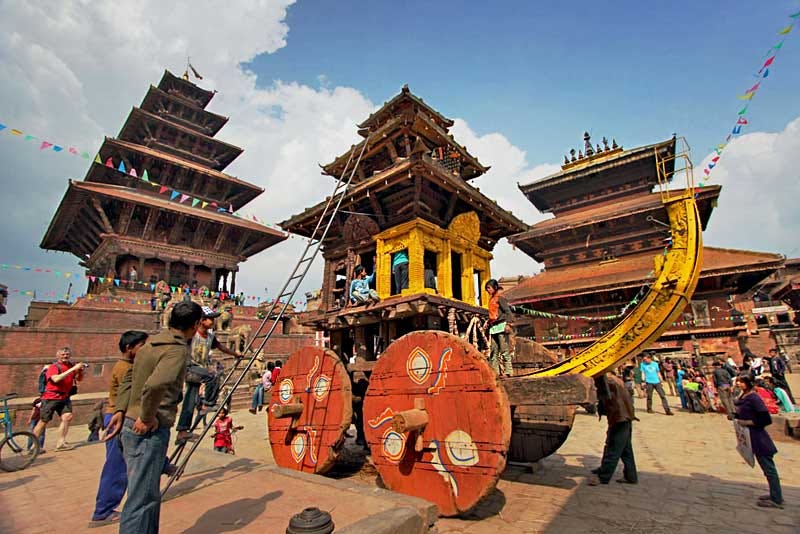
Bisket Jatra is one of Nepal’s most vibrant and exhilarating festivals, celebrated in the ancient city of Bhaktapur. This festival marks the Nepalese New Year and is deeply rooted in the traditions of the Newar community. Taking place in mid-April, it lasts for several days, featuring grand processions, chariot pulling, and a spectacular display of cultural heritage.
The Origins and Mythology of Bisket Jatra
The festival has an intriguing legend associated with it. It is said that a princess in Bhaktapur was cursed — any man who married her would mysteriously die the very next morning. After many deaths, a brave prince finally broke the curse by staying awake all night and discovering two serpents emerging from the princess’s nostrils. He swiftly killed them, saving himself and ending the cycle of mysterious deaths. This tale is symbolized in the festival by the erection of a long ceremonial pole known as “Lingo,” which is later pulled down to signify the destruction of evil forces

Highlights of the Festival
Chariot Procession
One of the most iconic events of Bisket Jatra is the pulling of giant chariots carrying the idols of Lord Bhairab and Goddess Bhadrakali. These massive wooden chariots are dragged through the narrow streets of Bhaktapur by teams of enthusiastic devotees. This procession is not just a religious event but also a fierce competition between different groups, with each side trying to control the movement of the chariots
Erection and Pulling Down of the Lingo (Wooden Pole)
A tall wooden pole, known as “Lingo,” is erected at Bhaktapur’s Bhairab Temple. This structure, symbolic of male and female divine forces, is later pulled down in an intense tug-of-war competition, signifying the battle between good and evil. The act of bringing down the Lingo is considered to usher in prosperity and is met with loud cheers and celebrations
Sindoor Jatra: A Festival of Colors
The festival also includes Sindoor Jatra, held in Thimi, near Bhaktapur. This event resembles the Indian Holi festival, where people throw vermilion powder (sindoor) at each other, painting the entire town in hues of red and orange. It is a day of merriment, dance, and music, bringing the entire community together
Traditional Music, Dances, and Animal Sacrifices
Throughout the festival, traditional Newari music fills the air, with musicians playing drums and cymbals as people dance joyfully in the streets. In some places, ritualistic animal sacrifices are also performed to appease the deities. Although this aspect may not appeal to everyone, it remains an integral part of the festival’s traditions
Why You Should Experience Bisket Jatra
Bisket Jatra is more than just a festival; it is a cultural spectacle that showcases the rich heritage of Nepal. The combination of mythological significance, thrilling chariot battles, vibrant color celebrations, and traditional music creates an unforgettable experience. Thousands of visitors from Nepal and beyond gather in Bhaktapur to witness this spectacular event.
If you ever plan a trip to Nepal in April, Bisket Jatra should be on your must-see list. It’s an exhilarating way to welcome the Nepalese New Year while immersing yourself in centuries-old traditions
Bisket Jatra is a unique celebration that offers a glimpse into the heart of Bhaktapur’s rich cultural heritage. From the spectacular chariot processions to the religious rituals and the community-centered spirit, the festival exemplifies. Nepal’s rich history, vibrant traditions, and deep spirituality. For those who witness it, Bisket Jatra is an unforgettable experience that underscores the resilience, unity, and joy of the people of Bhaktapur. Whether as a local or a tourist, participating in the festival’s excitement is a chance to immerse oneself in the living culture of Nepal. Contact us today at Happy Mountain Nepal, Facebook, Instagram, or TikTok.

No comments:
Post a Comment