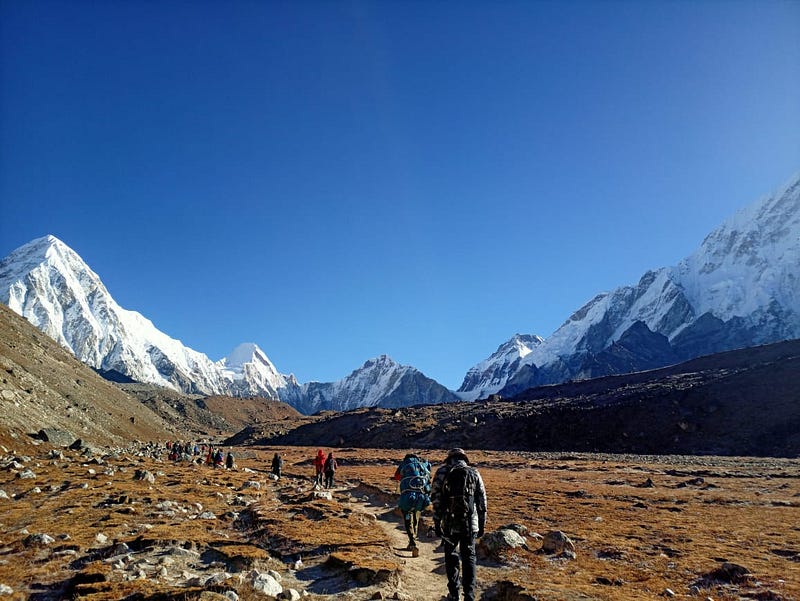
The Everest Base Camp (EBC) trek is one of the most sought-after trekking adventures in the world. Located in the Khumbu region of Nepal, it offers breathtaking views of Mount Everest (8,848m/29,029ft) and an unforgettable experience of the Himalayan landscapes, culture, and challenging trails. However, before embarking on this adventure, it’s crucial to understand its difficulty level, preparation needs, and itinerary plan to ensure a safe and successful trek.
Everest Base Camp Trek Difficulty
1. Trekking Distance & Duration
The Everest Base Camp trek covers a round-trip distance of approximately 130 km (81 miles) and typically takes 12–14 days to complete. On average, trekkers walk 6–7 hours per day, covering 10–15 km.
2. Altitude & Acclimatization
- The trek starts from Lukla (2,860m/9,383ft) and reaches the Everest Base Camp (5,364m/17,598ft
- The high altitude increases the risk of Acute Mountain Sickness (AMS), which can cause headaches, nausea, and dizziness.
- Proper acclimatization days (e.g., in Namche Bazaar and Dingboche) are crucial for adjusting to the thin air.
3. Trail Difficulty & Terrain
- The trek involves steep ascents and descents, rocky paths, and narrow suspension bridges.
- The terrain is rugged, with sections of steep uphill climbs and moraine walkways near the final stretch to Base Camp.
- Some sections, such as the Kala Patthar climb (5,545m/18,192ft), are challenging due to their steep incline.
4. Weather & Temperature Challenges
- Spring (March-May) and Autumn (September-November) offer the best weather conditions with moderate temperatures.
- Winter (December-February) can be extremely cold, dropping to -20°C (-4°F) at higher altitudes.
- Monsoon season (June-August) brings heavy rainfall and slippery trails.
5. Physical Fitness & Endurance
- The trek requires good cardiovascular fitness, leg strength, and stamina.
- Prior hiking experience, endurance training, and preparation hikes are highly recommended.
- Mental resilience is equally important due to the long days of trekking and unpredictable weather conditions.

Preparation for Everest Base Camp Trek
1. Physical Training
To build endurance and strength, start training at least 2–3 months before the trek:
- Cardio Workouts: Running, cycling, swimming, and stair climbing
- Strength Training: Focus on legs, core, and back muscles.
- Hiking Practice: Trek on hilly or mountainous terrains with a backpack.
- Breathing & Yoga: Improves lung capacity and oxygen intake at high altitudes.
2. Packing List & Essential Gear
Clothing:
- Base Layers: Moisture-wicking therm
- Insulation Layers: Fleece jacket, down jacket.
- Outer Layers: Waterproof and windproof jacket & pants.
- Trekking Pants & Shirts: Comfortable, breathable fabric.
- Gloves, Hat & Buff: Protection from cold and wind.
Footwear:
- Trekking Boots: Sturdy, waterproof, and well-broken-in boots.
- Wool Socks & Gaiters: Warm socks and gaiters to prevent snow or dust.
Accessories & Equipment:
- Trekking Poles: Reduce knee strain on descents.
- Backpack (30–50L): To carry daily essentials.
- Sleeping Bag (-10°C to -20°C rating): For cold nights.
- Headlamp: Essential for early morning hikes.
- Sunglasses & Sunscreen: Protect from strong UV rays at high altitude.
- Water Bottles & Purification Tablets: Stay hydrated safely.
3. Permits & Documents
- Sagarmatha National Park Permit ($30 USD approx.)
- Khumbu Rural Municipality Permit ($20 USD approx.)
- TIMS Card (Trekkers’ Information Management System) (Optional for guided groups)
- Travel Insurance covering high-altitude rescue.
4. Food & Accommodation
- Lodges & Tea Houses: Available throughout the route, offering simple meals like Dal Bhat (rice & lentils), noodles, and soups.
- Drinking Water: Buy bottled water or refill from streams (with purification tablets).
- Electricity & Charging: Available for an extra fee in most teahouses.
- Wi-Fi & Network: Limited and expensive at higher altitudes.
Everest Base Camp Trek Itinerary Plan
Standard 14-Day Itinerary
Day 1: Fly to Lukla & Trek to Phakding (2,610m/8,562ft) (3–4 hrs)
Day 2: Trek to Namche Bazaar (3,440m/11,286ft) (6–7 hrs)
Day 3: Acclimatization in Namche (Hike to Everest View Hotel)
Day 4: Trek to Tengboche (3,860m/12,664ft) (5–6 hrs)
Day 5: Trek to Dingboche (4,410m/14,469ft) (5–6 hrs)
Day 6: Acclimatization in Dingboche (Hike to Nagarjun Hill)
Day 7: Trek to Lobuche (4,910m/16,109ft) (5–6 hrs)
Day 8: Trek to Everest Base Camp (5,364m/17,598ft) & back to Gorak Shep (5,164m/16,942ft) (7–8 hrs)
Day 9: Hike to Kala Patthar (5,545m/18,192ft) & trek to Pheriche (4,240m/13,910ft) (7–8 hrs)
Day 10: Trek back to Namche Bazaar (6–7 hrs)
Day 11: Trek back to Lukla (6–7 hrs)
Day 12: Fly back to Kathmandu
Final Tips for a Successful EBC Trek
- Start Slow, Walk Steady: Do not rush; gradual ascent is key to avoiding AMS.
- Stay Hydrated & Eat Well: Drink at least 3–4 liters of water daily.
- Listen to Your Body: If symptoms of altitude sickness appear, descend immediately.
- Respect Local Culture: Always greet locals with “Namaste” and respect customs.
- Hire a Guide or Porter: They provide navigation, safety, and carry heavy loads.
Conclusion
The Everest Base Camp trek is a challenging yet rewarding adventure that tests your endurance, determination, and love for the mountains. With proper preparation, physical training, and careful planning, you can successfully complete this iconic trek and witness the world’s highest peak up close. Whether you are an experienced trekker or a passionate traveler, EBC is an experience of a lifetime worth every step.
Are you ready to take on the Everest Base Camp challenge? Plan well and embrace the journey of a lifetime

No comments:
Post a Comment