Thursday, May 29, 2025

Nepal Bhutan Tour: Journey Through the Himalayan Kingdoms

 A Nepal Bhutan holiday is very rewarding and adventurous holiday, because you will enjoy the cultural history of Nepal combined with the peaceful religious temperament of Bhutan. These two countries are together in the Himalayas yet so vastly different with the way of life, geography and the culture. A Nepal Bhutan holiday provides the ideal mix for a fascinating holiday of culture, adventure and some tranquility.

In this blog, we aim to explain why you will definitely not regret doing a Nepal Bhutan tour, what you should do and see of the two countries, how to put the trip together, what you must not miss and offer some travel tips so you can make the most of your travels.

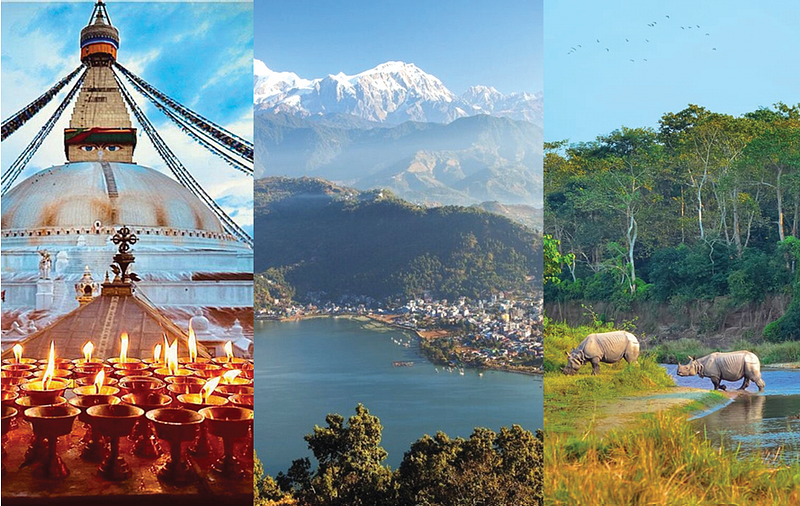
Swyambhunath in Nepal on the left & Tigers Nest in Bhutan on the Right[/caption]

Why Choose a Nepal Bhutan Tour?

If you are someone, who loves Himalayan, spiritual places then Nepal Bhutan Tour should definitely be in your list. Nepal is a fantasy kingdom with its crowds and UNESCO World Heritage monasteries, and a playground of the highest peaks in the world. Bhutan is known for its Gross National Happiness , its dzongs (fortresses), and its peaceful mountain valleys.

Top reasons to choose this combo tour
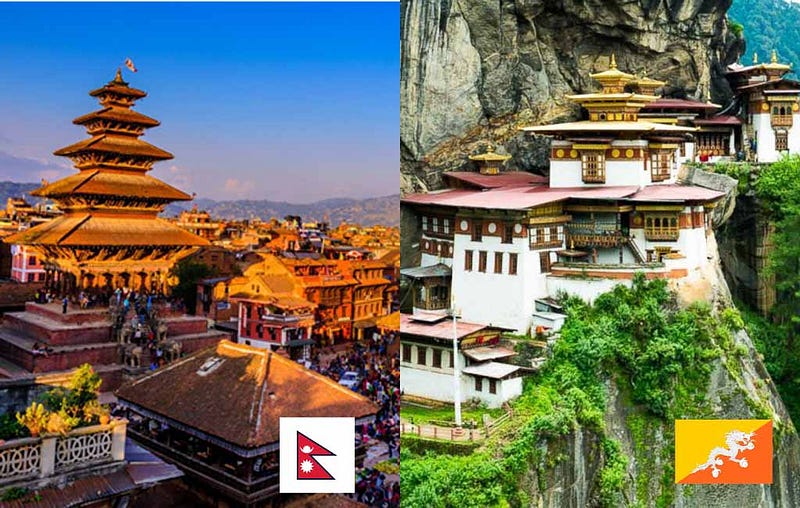
Nyatapola Temple in Bhaktapur & Tigers Nest know as Paro Tastkhang

Nyatapola in Bhaktapur & Tigers Nest on the Righ

Explore ancient temples, monasteries, and royal palaces

Walk on ancient temples, monasteries, and royal palaces.
There is nothing quite like enjoying the wealth of Nepal and Bhutan’s heritage by visiting both nations at once. The medieval palaces, monasteries, and royal temples tell us something about the past civilizations that existed centuries earlier. From the stunning wood-carved buildings of the Kathmandu Valley UNESCO World Heritage sites to the stunning Tiger’s Nest monastery hanging perilously, in film-buff fashion, off the side of a cliff in Bhutan, you will be surrounded by the Himalayan kingdoms’ spiritual and artistic heritage. In awe of the stunning Himalayas that sweep across two nations

Witness the grandeur of the Himalayas in both countries.

The tour will give you stunning scenery of the royal Himalayas of Himalayas from various positions in Nepal and Bhutan. You have your monolithic Nepalese mountains like Everest and Annapurna, and in Bhutan, you have stunning white mountain ranges like Jomolhari and the eastern Himalayas. There is no other range of mountains that can compete with the natural landscape and altitude of the world’s highest mountains when you are viewing them in two countries!

Experience two distinct but complementary Buddhist cultures.

Nepal and Bhutan are Buddhist countries, but they practice and interpret their religion of Buddhism in different ways. Nepal is a syncretism of Tibetan and concurrent Newar Buddhist practice overlaid with a further layering of Hinduism imposed upon it, whereas Bhutan is a culture preservation in the Tibetan Vajrayana tradition.
This journey will enable the visitor to witness the syncretism as well as the wholeness of harmony of Himalayan spirituality.

Experience nature-based, eco-tourism in Bhutan.

Bhutan is the world-leader in philosophy-minded, nature-friendly, Gross National Happiness-friendly ecotourism. It’s fresh-air, pure, virgin; completely virgin landscape; and nature-awe ecotourism for not desecrating nature in as intact a state as possible and greatest respect for the nation’s culture. Tourism has left both negative and positive impressions, and your trip to Bhutan will undoubtedly be positive in the thinking of today’s world.

Visit two countries, Nepal and Bhutan Tour in one seamless, well-managed trip

Nepal and Bhutan tour vacation cum holiday is an efficient means of traveling to two good places at once successfully planned single vacation.

As one can probably guess, far less total travel time will be spent than with single travel to see two widely different good places. All thanks to convenient logistics, visa arrangements, and someone else doing the heavy work of bringing you to the navel of the Himalayas while you simply unwind and drink in the raw awesomeness of the experience without needing to organize a string of trips.

Highlights of Nepal

Kathmandu Valley: Culture and Chaos in Harmony

Kathmandu Valley is a compact mixture of old culture and new chaos, infinite years of tradition shattered by the never-ending syllabic rhythm of urban life. And at its center is Kathmandu, or, more specifically, Kathmandu, the capital of Nepal, with centuries of history, religion, and craft. It is possible to stroll from the towering copper gilt spires of Swayambhunath (Monkey Temple) to the holy precinct of Pashupatinath to the colorful courtyards of Kathmandu Durbar Square within a few hours. And around every corner, there are manifestations of Hinduism and Buddhism, the two world religions most visible to the naked eye on earth.

The weathered wood carvings of the palaces and temples speak volumes of the artistry of the Newar people, the valley’s earliest inhabitants. This is no wealth behind glass; life is lived here. People light butter lamps under a Bodhi tree, chant in unison, and cry, reading accounts of festivals and parties in a ritual at once sacred, social. The city, inasmuch as it is anarchic, is a grid of structured chaos — a familiarity that is the child of ethnography. Unapologetically, the extraordinary is everywhere.

Everywhere, in fact. Kathmandu Valley is nature’s repose on arrival in the Himalaya — no less striking a synthesis of cultures, the Valley is the experience corollary to your arrival as the gateway to the Himalayas and journey to the Nepal-Bhutan tour. What’s more, not only to be entertained, but to have a body, mind, and soul experience directed at the resolution of contrasts and deviations?

Don’t miss:

Swayambhunath (Monkey Temple)

Swayambhunath (Monkey Temple) perches on a hilltop over the Kathmandu Valley, with panoramas of the valley floor and spiritual peace.

One of Nepal’s most sacred Buddhist pilgrimage destinations, this stupa is identified by its giant white dome, gold-painted spire crowned by the Buddha’s ever-vigilant eyes, flapping prayer flags, and pilgrims spinning prayer wheels as they circumnavigate its base.

Swayambhunath is all that one hopes a monkey temple will be, with its mischievous troop of monkeys. It’s the location, backdrop, and value that make Swayambhunath a must-visit.

Boudhanath Stupa

Boudhanath Stupa is among the largest Buddhist monuments and one of the most significant on the entire Asian continent, famous for its huge white dome and golden spire with the Buddha’s piercing eyes at the top. One of the ancient Nepalese trade routes goes through Boudhanath; it’s a significant Tibetan Buddhist site for centuries in Nepal and still remains so in its religious significance to pilgrims and monks today.

You can observe Nepalese of all types walking around the stupa at the kora speed every day, which makes it surrounded by a variety of monasteries, shops, and cafes that resonate with Tibetan traditions. Boudhanath is a peaceful meditation center with a big stupa where one can see living Buddhist culture amidst a thriving society. Bhaktapur and Patan are two of the three medieval Kathmandu Valley cities and the peak of Nepali art and culture.

Pashupatinath Temple

Pashupatinath Temple, which is located on the bank of the holy Bagmati River, is Nepal’s most important Hindu temple and a UNESCO World Heritage site. It is an extensive temple complex dedicated to Lord Shiva and draws pilgrims and sadhus (holy men) from throughout South Asia. Perhaps the most striking and memorable aspect of the temple to many visitors is the open-air cremation ghats, where solemn Hindu funeral rituals are performed beside the rushing river. Hindus are the only visitors allowed in the shrine of the temple, but there are many other very significant details that provide many insights into Nepal’s spiritual life and the role of ceremonial death rituals and rebirth, as well as serious spiritual practice of all sorts in daily life.

Bhaktapur and Patan

These are two of three medieval Kathmandu Valley cities and the peak of Nepali art and culture. Bhaktapur, the “City of Devotees,” is replete with some of the finest medieval architecture, with roomy courtyards, staggeringly detailed wooden and brick carvings, especially around Bhaktapur’s Durbar Square. Patan, or Lalitpur, the “City of Fine Arts,” possesses unparalleled temples, metalwork, and the superb restoration of Patan Durbar Square. Both cities are replete with cultural and artistic riches of the Newar civilization and far more relaxed than Kathmandu’s chaos.

Pokhara: Nature’s Playground

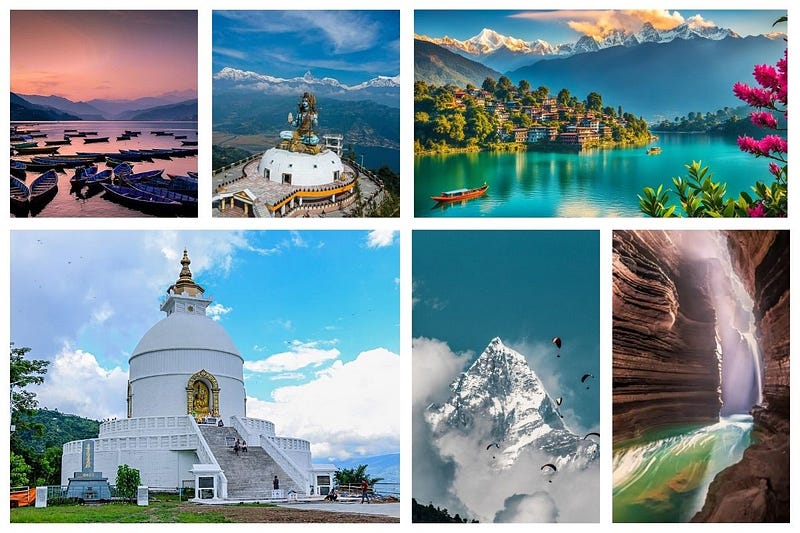
It is a quiet and peaceful town, but not defect of adventures and nature too. Pokhara is situated on the bank of Phewa Lake, before the head of the foothills, and at one end, on one side, there are snow-capped Annapurna mountains, and on the other side is Machapuchare (Fishtail), it is a feast for the eyes. It’s an amazing sight to see the peaceful sight of the white of the Himalayas, with their blanket of snow reflected in the lake, there are motorized wooden boats, one red and one blue, floating across the lake in the morning. Pokhara is above Lakeside, as the main tourism destination, it is a windy street of boutiques, yoga halls, and boutique hotels, and overall tranquil and peaceful, so it becomes the perfect destination for tourists and travelers looking for a place to unwind and be themselves.

In addition to being a peaceful and quiet town, Pokhara is also an adventure paradise, since it is the starting point of the famous trekking trails, including Annapurna Base Camp and Mardi Himal treks.

Pokhara is also a paragliding, zip-lining, ultralight, and mountain biking base,a temporary adventure base, and activity center. In addition to the adventure activity center, you are also able to explore the World Peace Pagoda, Davis Falls, Gupteshwor Cave, and International Mountain Museum.

Top activity:

  • Phewa Lake boating.
  • Paragliding in the Himalayas.
  • World Peace Pagoda.
  • Sunrise panorama in Sarangkot.
  • And if you are a nature and animal lover, then Nepal’s Terai’s Chitwan would be your first choice.

Chitwan or Lumbini Extension

It is home to Chitwan National Park, a world heritage site, and the most diverse area.

Experience a jeep safari and see the one-horned rhino, Bengal tiger, and wild elephant, or experience canoeing the Rapti River and see crocodiles and some rare birds. Or you could learn about the Tharu people and the rural environment, food, dancing, and/or rural village way of life instead of trekking. Or if you are like me and wish you could wander without wasting the spirituality of your Nepal trek, then you can have a peaceful pilgrimage to Lumbini, Lord Buddha’s birthplace, another UNESCO World Heritage site.

The site is the Holy Maya Devi Temp, where noise circa 2,500 years ago in the Southern Nepal area of Lumbini encountered history with the birth of Buddha. The shrine is enveloped by the ruins of history and the idyllic gardens that lie before the pilgrims who descend, from distances near and positioned on the globe, to experience the essence of the pilgrimage.
Both temples take us back in time to an era of Buddhist architecture and the wonderment of the world’s religions. Lumbini takes us to time to reflect, peace, and understanding of how Buddhism came to be.

Highlights of Bhutan

Paro: Your Doorway to the Kingdom

Paro is the first place where foreign guests see Bhutan by air. Located in a picturesque valley with the only international airport in Bhutan. Paro is an inviting entry point to experience all Bhutan has to offer. The flight descent into Paro is probably one of the most beautiful and exciting flights in the world. The views of the Himalayas when approaching Paro are panoramic. Once landing, you will see the beautiful valley with traditional local homes, eco lodge hotels, and forests of emerald and jade, and at times, snow-covered hills!

Paro will set the tone for your adventure in Bhutan. The sacred temples, rural calmness, and beauty of Paro’s countryside culture, in contrast to its mountains and hills, represent the calm taste of Bhutan. It is only the gateway to a country; it is the showcase that has the famous cliff-side Tiger’s Nest Monastery (Taktsang), Paro Dzong, and National Museum, which are right down the road, places to visit before leaving this fabulous place. Paro is a lot more than an airport hub; it is an experience and glimpse into the Kingdom’s rich culture.

Paro Taktsang (Tiger’s Nest Monastery)

Sitting atop a 900-meter cliff face over Paro Valley, the Paro Taktsang is the holiest and best-known monastery in Bhutan. Founded in 1692 around a meditation cave where Guru Rinpoche (Padmasambhava) meditated, it is, by legend, a place of pilgrimage and a Bhutanese emblem of spirituality and spirituality. The trip to this monastery offers some of the best mountain scenery and also a quiet and tranquil ambiance. The visitors go there for the excellent experience of design architecture in places of worship, to experience the religious significance of the location, to see the scenic vistas, or even just to mark an important place off their bucket list. One of the holiest places for Buddhist pilgrims, Taktsang Monastery can’t be omitted by tourists and pilgrims.

What to see/do:

- The holy meditation cave of Guru Rinpoche
- The beautiful cliffside structures with exquisite Bhutanese architecture
- Paro Valley and Himalayan scenery
- The nearby yearly celebration of the Tsechu festival
- The scenic and demanding upward trekking path to the location

Rinpung Dzong

A gigantic and large religious, military, and administrative fort is the Aggrad Rinpung Dzong of Paro.
Built during the 17th century, it is famous for its enormous walls, Bhutanese traditional architecture, and woodcarvings. It is a site where religious festivals such as Paro Tsechu are held, and the government still uses the site for office facilities, as well as uses the site for monastic activities. It is highly acclaimed by tourists for its two ancient courtyards, temples with ornate carvings, and cultural heritage. Top attractions:

  • The inner, spacious courtyard used in festivities
  • The temples and shrines housed within
  • Traditional Bhutanese fortress style of architecture
  • The Paro Tsechu festival with rituals and masked dance performances
  • Panoramic views of Paro Valley from the top of the Dzong walls

National Museum of Bhutan

The National Museum of Bhutan is located in the old Ta Dzong building overlooking Paro Valley. The museum is suitable for the person who wants to study Bhutanese history, culture, and art within a substantial period of time; it possesses a rich collection of ancient remains, religious and historic remains, and contemporary art among other units like traditional weapons, textile, crafts, and thangka (Buddhist paintings). The National Museum is a great collection that offers Bhutan’s religious past and folklore heritage. Besides and above this is the Ta Dzong structure itself, a historic watchtower with Paro views.

Main Attractions:

  • Typically very good group of Buddhist paintings/thangkas
  • Exhibits pertaining to Bhutanese history and cultural artifacts
  • Demos of antique armory/weapons
  • Ta Dzong watchtower structure
  • Panoramic view of Paro Valley from museum windows

Thimphu: Bhutan’s Capital with a Modern Twist

Thimphu, the capital of Bhutan, is a fascinating town with time-worn customs blended with a pinch of new modernity. As the largest city in the country, but a peaceful and quiet town-like in nature, where there is an old Buddhist existence punctuated by hopes for what tomorrow will bring. Monks wearing red robes walk past fashionable cafes and boutiques, with the government offices side by side with traditional Bhutanese ones with finely carved wood and multi-colored murals. Thimphu does not have traffic lights like most capital cities, but it has traffic police, and that is why the city is special, and why the city is not crowded like other cities. Thimphu is becoming equally a new, modern political, economic, and cultural hub, but retaining a genuine contemporary lifestyle.

There are new restaurants, new hotels, and new art classes available in the town in abundance, and embracing young residents, not to mention city tourists. One of the most applicable aspects of Thimphu (like a gigantic Buddha Dordenma statue, or the Saturday market) is one that addresses a city in motion and unfolding into transformation, but retaining its roots and established ways and tenets of spirituality and culture. Thimphu gives us a kaleidoscopic picture of how Bhutan is marching ahead and what a great and wonderful sight one country slowly slowly making its move in the 21st century, travelers have.

Must-see attractions

Buddha Dordenma

Buddha Dordenma is the world’s highest gold-plated Sakyamuni Buddha statue, located high above the city of Thimphu (the capital of Bhutan) in the mountains. The statue itself is 54m high, which makes it among the highest statues of a Buddha in the world. The views are especially great from a sizeable part of Thimphu, and when one looks at the vast Thimphu towards the areas that are mostly architecturally contoured structures well defined in their bold contoured set, which makes large-scale exploits to the potentially cultural construct seas, it is really peaceful and beautiful.

The statue of the Buddha also contains the little Buddha statue which is amount then — so the entire joy and peace of Bhutan is included. It has a 360 degree view of the canyons will luxuriance — so the gorgeous mountains of Bhutan with the valleys that this statue is placed over are overwhelming stunning. It is a truely remarkable spiritual venue!! Also, Buddha dornenma frequently provides the post and sponsor Buddhist resource.

Highlights

  • little Buddha statues all around the big Buddha statue
  • large golden statue of Sakyamuni Buddha
  • prayer and meditation sites under the base of the statue
  • landscaped gardens on the property
  • far off view of Thimphu city of foot foothills of the Himalayas

Tashichho Dzong

In the northern part of Thimphu town is Tashichho Dzong, a monastery-fortress, the Royal Office, and the administrative and judicial center of the government. All in all, it is a pleasing combination of religious and historical structures, and the impressive administrative and religious structures of Tshichho Dzong, temples, beautiful temples, courtyards, prayer halls, and important Tashichho Dzong events each year, in particular the Thimphu Tsechu festival. Tashichho Dzong’s walls are large, white-washed walls with golden-topped roofs on the upper floors, stature of political and religious power.

Major Attractions:

  • The King and other government departments’ chambers
  • Beautiful temples in the dzong
  • A great number of prayer rooms are laid out inside the dzong
  • The traditional dances during the annual Thimphu Tsechu
  • Some beautiful Bhutanese fort structures
  • The dzong’s well-preserved courtyards and gardens

Folk Heritage Museum

The Thimphu Folk Heritage Museum gives tourists a special opportunity to get acquainted with rural Bhutan. The Museum is housed in a traditional three-storey farmhouse that is very well maintained, and shows real items found in a rural Bhutanese home, such as farming tools, furniture and textiles; concerning rural life exhibited, the principles tell the story of Bhutan’s farming past, types of homes, methods, which exist and endure as important parts of Bhutan’s cultural identity. The whole experience is serene and pensive; while the aura of the capital can no longer be obtained, one can entirely be encased by the tourist work of the unfathomable.

Highlights include:

  • the old three-storey house architectural structure actual country
  • home furniture and appliances, the contents set of pieces of agrarian and
  • Cloth weaving technology is fully evocative of Bhutanese family life from day to day
  • Adorable floral courts and courts to contemplate.

Punakha: Valley of Fertility and Beauty

Punakha is terrific for Natural Beauty and History.

Highlights include:

  • Punakha Dzong — The most Beautiful fortress in Bhutan
  • Chimi Lhakhang — The Divine Madman Fertility Temple
  • Suspension Bridge — One of the longest and best in Bhutan.

Sample 10-Day Nepal Bhutan Tour Itinerary

Day 1–2: Kathmandu, Nepal

Days 1–2: Kathmandu, Nepal
An adventure is ahead of you in Kathmandu, the capital of Nepal, which has so much history and depth of spirituality. You will visit many of UNESCO’s World Heritage Sites in the Kathmandu Valley, and experience the sacred Pashupatinath Temple, where you get to experience a colourful and rich series of Hindu rituals on the banks of the Bagmati River. You will see the ancient courtyards of Kathmandu Durbar Square, surrounded by Newari architecture and palaces dating back centuries, located just seconds away. And of course, Bhaktapur and Patan, ancient cities with amazing temples, workshops of artisans, and community squares, where you will get to visit as well, experience the handmade crafts of the locals, and really get into the true cultural handicrafts of Nepal. Experiencing the fusion of spirituality and the daily hustle-and-bustle of the city is a fascinating start to Nepal.

Day 3–4: Pokhara, Nepal

Whether you fly into Pokhara or drive, you can’t miss the serene beauty of Pokhara, a picturesque city on Phewa Lake and surrounded by the greenery of the Annapurna Range. You could find yourself on the lake sipping coffee, floating across the lake to the lovely Tal Barahi temple, which is on a tiny island in the lake. You would soak up the creative energy that emanates from the lake, people, and environment. How you would choose to spend your mornings has already been suggested by Lamar. We will head up to Sarangkot for more amazing views of the sunrises over the snow-capped ridges of the Himalayas. For the more adventurous types, they have caves, waterfalls, and other subtle hikes all around the Pokhara valley to explore. The natural beauty here is adventurously peaceful compare to the metropolitan insanity of Kathmandu, and is refreshing for me.

Day 5: Fly to Paro, Bhutan

Day 5: Fly to Paro, Bhutan
You will depart from Nepal on your flight to Paro, Bhutan. You will be astounde by the spectacular scenery of the Himalayas as they tower and fade into the sights and cultural lands of Bhutan. Once you arrive in Paro, you will transfer to Thimphu, Bhutan’s capital. Thimphu is an insight into Bhutan’s juxtaposition of traditions and modernization. After visiting some other cultural sites in the area, the afternoon will take you to Tashichho Dzong, the seat of Bhutan’s government, and then to the massive Buddha Dordenma statue, which sits high above the valley region. I think this embodies a subtle sense of place in the cultures of community, traditions, and individuality of Bhutan. You will now be situate for your engagements, retreats, exploration, and all of the natural beauty and spaces that Bhutan possesses.

Day 6–7: Punakha and Dochula Pass

When you have traveled east toward Punakha (the old capital city of Bhutan), and home to the majestic Punakha Dzong (where the two rivers meet), and with temples well worth a visit for their original decoration and open cloisters to give some cultural and Bacchanalian flavor to the overall religious experience in Bhutan, you may have a stop along the way at Dochula Pass, with its 108 chortens (stupas,) and with a nice view of the Himalayan mountains in the far background, and when you arrive hopefully it will clear up for you to take it all in, and at the very least you will have an opportunity to get some amazing pictures! Next, you will enjoy the lush, fertile valleys of Punakha, which may be a world apart from the place you just left in Thimphu!

Day 8–9: Paro & Hike to Tiger’s Nest

Having returned to Paro and ready for yet another adventure, you’ll embark on the legendary hike to Paro Taktsang or the Tiger’s Nest Monastery. This moderately challenging hike makes for some spectacular views and a bit of regret at not becoming a hiker earlier in life.

The monastery gates open to what is both the spiritual hub of Bhutan. An iconic cultural representation of the relationship the nation has with the practice of the Buddhist faith. After finishing the hike, take in Paro Town, its traditional daily markets. The National Museum is located in the old watchtower at Ta Dzong. The local temples to engage and immerse yourself in the Bhutanese local culture. You can learn the importance of the historical events that have shaped this society.

Day 10: Departure

Now, complete your forward itinerary with a return flight from Paro. You will be collecting some heartbreaking trinkets from the experience of culture, nature, and spirituality in Nepal. Bhutan (and nothing sadder than memories of a past life — unless you solemnly do not intend to return). You may extend your trip according to your desires; make it a month. Go to more remote places and join in the festivals (there is some amazing food), Tory, or just enjoy. The further opportunities and strategies of Himalayan trekking and/or Bhutanese traditions.

Best Time to Travel

The most reliable traveling seasons for a Nepal and Bhutan tour are in the seasons of spring (March to May) and autumn (September to November), common factors among each of these seasons tend to be clear skies, mild temperatures, and holidays. In Bhutan, you may be included in the Paro Tsechu Festival (March/April; the festivals vary each year) as well as Dashain and Tihar in Nepal (October/November; the dates fluctuate from year to year).

Travel Tips for a Seamless Nepal Bhutan Tour

1. Visas for Nepal Bhutan Tour

As far as Nepal is concerned, any foreigner is entitled to a visa on arrival at Tribhuvan International Airport in Kathmandu or in the border areas. Too easy, just fill in a form, pay depending on your stay, and be stamped with your visa in 5 minutes. Bhutan is strict with its visa policy as it seeks to protect its nature and culture. In order to travel to Bhutan on a tourist visa, one should plan their tour. With an approved Government Bhutanese Tour Operator. The visa will arranged by the Tour Operator. Independent free travel is restricted to tourists in Bhutan. A visa will only be issue once the Tour Operator has plan an escort tour. It has emphasize with a pre-approve itinerary from the Government of Bhutan. This is intend to promote ecologically conscious tourism and the sustainability of Bhutan’s unique heritage.

2. Flights

Direct flights from Tribhuvan International Airport, Kathmandu, to Paro International Airport, Bhutan’s international airport. Scenic flight operated by Bhutan Airlines and DRUK air with Himalayan scenery if the weather is favorable. The flight is brief, otherwise at the weather’s discretion, according to the mountain range. We would recommend booking your tickets in advance. Include additional time in your travel plan while traveling between Nepal and Bhutan.

3. Currency for Nepal and Bhutan Tour

The Nepalese Rupee (NPR) is the local currency of Nepal, and ATMs. Exchange centers are widely available in Kathmandu and Pokhara. The Bhutanese Ngultrum (BTN) is the currency of Bhutan and is pegged to the Indian Rupee. The whole expenditure for a day in Bhutan is in Indian Rupees, i.e., food and stay; 500 and 2000 bills are not normally accept. So it would be advisable to exchange the smaller denomination for it.

Although credit cards are accept for payment by all the big hotels and stores. Money is still the queen of rural Bhutan. So it may be an idea to carry local money if you venture out of main cities.

4. Health & Safety

Nepal and Bhutan are also very safe to visit with little crime and friendly locals. Nevertheless, tourists must take some regular precautions such as keeping valuables in hotel safes and avoiding empty streets at night alone. Always consider purchasing a low-cost health insurance policy covering medical evacuation especially if you will be trekking or venturing in rural rural villages. For shopping, filtered or bottled water itself must be your preference, and take adequate care against altitude sickness ascending to greater heights. Be also sensitive towards local culture and tradition. Dress modestly, remove shoes when in religious sites, and don’t forget to ask for permission before taking a photograph of the local individual.

5. Guides

A good guide, an adopted policy of the Bhutanese licensing board, is a requirement for everyone. Your guide will take care of everything. They makes your journey a bit more pleasant by introducing you to the history, culture and religion of Bhutan. There is no necessity for a guide in Nepal. If you are trekking, on a cultural tour or where the places do not open. A good guide is an excellent way of learning, of overcoming the language problem and of having a smoother and safer journey. A guide will enhance your experience. Most tourists find that country guides provide history and stories that make your touring an absolute cultural exchange.

Sustainable Tourism and Cultural Respect

We will plan to trip to Bhutan and Nepal in the spirit of developing a sense of responsible tourism consciousness. Bhutan limits the number of tourists, and how often they are able to enter the country. In order to plan for caring for its environment and culture. Nepal very much promotes ecotourism and community-based tourism. Visitors will be encourage to dress appropriately.

Final Thoughts: Nepal Bhutan Tour

Your trip to Bhutan and Nepal is more than a vacation; it is a trip to the stunning Himalayas. The peacefulness of the monasteries in Bhutan and the thoughtful monks are commotion of the streets of Nepal, people, food, and lush countryside. And as a couple, the contrasting and complementary aspects fit beautifully together. If you want to know more about travelling places in Nepal, you can visit our website.

The combined Nepal Bhutan trip would leave you with an even deeper admiration. It is love for both the country and the region, thus a return trip would be in order. You would be one of those tourists that just keeps returning to the region, a fan of the country. Contact us today at Happy Mountain Nepal, on Facebook, Instagram, or TikTok

Thursday, May 22, 2025

Everest Base Camp Trek: Lifetime Experience


Everest Base Camp Trek is a once-in-a-lifetime spiritual, physical, life, and cultural quantum leap. EBC is 5,364 meters (17,598 ft) high and is located around the highest mass on earth, Mount Everest (8,848.86 m / 29,031.7 ft). With each step, you are closer to trekking on top of mythological mountain ranges, century-old monasteries, hundred-year-old Sherpa villages, and a soul-trek experience that you cannot wipe away from your memory.

Why Everest Base Camp Trek Is a Lifetime Experience

1. Get close to Mount Everest

Being at EBC is being and standing in the shadow of the world’s highest- a position where you can only dare to have the audacity to assert and check off your bucket list, together with all the other adventure-seeking travelers from across the globe. You’re not on Everest, but where the Everest giants of Mount Everest are, like sunrises on the great ridges, is heavenly. Walking the EBC trail by yourself takes you, by legend, as close as it gets to the Mount Everest summit view and mythic Kala Patthar (5,545 meters), quite possibly the best view of Everest you’ll ever have the good fortune to witness.

2. Sherpa Culture and Spiritual Immersion

You’ll meet Sherpa villagers of the Khumbu: tough Himalayan folk with highly developed mountaineering prowess, boundless hospitality, and first-rate survival skills. You’ll trek through the villages of Namche Bazaar, the villages of Tengboche, and the villages of Pheriche, all with their multicolored prayer flags flapping in the breeze, all scattered with found along the trails like spinning prayer wheels, all topped on ridges with stupas.

At Tengboche Monastery (3,867 m), you will pray with chanting monks within sacred walls, and dark Ama Dablam and the other great white giants — a spiritual experience in the true spirit of your trek.

3. Varied and Breathtaking Landscapes

We trek through varied Himalayan scenery:

  • Rhododendron and pine forest hide Lukla and Phakding villages,
  • Suspension bridges spanning high above glacier-fed rivers,
  • Yaks and alpine grasslands at Dingboche and Lobuche,
  • Rock moraines and snow ridges on the way to Gorak Shep and EBC.

Every bend in the trail, a new panorama, a new peak, another rest stop, and just soak it all up.

4. A True Physical and Mental Challenge

It’s not a holiday- it’s a test. You’ll be trekking 5–7 hours every day, trekking all day, a nd cold and tired all day. But it is in the challenge that we get tough. To even get to Base Camp is such a great feeling and sense of achievement. It’s a test of your endurance, your determination, and your sense of accomplishment.

Everest Base Camp trek route

Day 1: Fly to Lukla and Trek to Phakding

It starts with a pounding mountain flight to Lukla, a small cliff airport that is perched at a height of 2,840 meters. It’s a 30–40-minute roller coaster ride, and you don’t even get the sensation that you’re flying over the Himalayas. The trek starts here, and you walk from the pine forest and small Sherpa villages step by step. You further trek to Phakding at an altitude of 2,610 meters. You see many stone chortens, stupas, and prayer flags waving in the wind along the path.

Day 2: Namche Bazaar to Phakding

A different evening sees you once again on the trail side of the banks of Dudh Kosi.
You trek on suspension bridges, mega suspension bridges, such as some of the following: the Hillary Suspension Bridge, which has the questionable honor of having had a string of accidents, including a helicopter crash landing.

You enter the Sagarmatha National Park at Monjo, where they check your trekking permit. The path climbs but it’s the final two hours of tough and steep walking to the wealthy Sherpa town, Namche Bazaar, at 3,440m. If the day is clear, you get your first view of Mount Everest. There are shops, bakeries, equipment stores, and mountain views to be had at Namche.

Day 3: Acclimatization Day at Namche Bazaar

To avoid high altitude sickness, you will take an entire day’s rest in Namche.
Not idling about, but a quick walk around so that your body is conditioned and taking the most scenic trek to Everest View Hotel (3,880 meters) with sunrise over Everest, Lhotse and Ama Dablam, or the walk to Khunde and Khumjung village home of the Hillary School and monastery which contains a Yeti scalp preserved.

You can stroll around the Namche evening bazaars, visit the Sherpa museum, or just sit and have tea and look across the valley.

Day 4: Trek Tengboche to Namche Bazaar.

The mountain trail starts after departing Namche because from here, one has a good view of Everest, Nuptse, and beautiful Ama Dablam.

This is a tuning pair of hours of valley and mountain, then steeply downwards to the Dudh Kosi River and upwards again sharply through pine and rhododendron forest to Tengboche (3,867 meters).
This quaint, spiritual village contains the famous Tengboche Monastery, the biggest monastery in the Khumbu valley.

It lies on massive slopes, a sacred and serene place where you become a part of a prayer ceremony and achieve some peace of mind.

Day 5: Tengboche to Dingboche trek

Descend from Tengboche along the forest to Debuche and further down to Imja Khola on a rickety bridge and then to Pangboche, which is the highest permanent settlement in the area. Further, a more Alpine and open country with wider valleys towards Dingboche (4,410m), a windy town with white tops of mountains in the distance. And Dingboche is fine too, “post summer valley,” and it’s beautiful, and a pleasant rest to acclimatize.

Day 6: Acclimatization Day at Dingboche

Having a day of full acclimatization allows your body time to adapt to the altitude.

Most trekkers visit Nagarjun Hill (5,100m), an exhausting but well worth the climb with really stunning views of Makalu, Island Peak, and the valleys below. An alternate is a side trip to Chhukung and glacier sightseeing, and a climbing path. Dingboche is a pleasant spot, few sun-dried teahouses and ga good location between the massive peaks of Ama Dablam and Lhotse. Dingboche is a relief.

Day 7: Lobuche trek from Dingboche

You will gradual ascent up the Imja Valley. The rocky path continues upwards, ascending, ascending through dry but breathtaking alpine desert. When we traverse over to the other side of Dughla (Thukla), the path steepens even more, and we will be along the ridge with memorials to the climbers who didn’t return from Mt. Everest. The squalor of this path is made worthwhile by the sight. We ascend the rocky path to Lobuche (4,940 meters), a small glacial town at the foot of giants Nuptse and Pumori.

Day 8: Gorak Shep to Everest Base Camp

The last day will likely be the most exciting day of the trek.

Take a brief hike to Gorak Shep (5,164m), the final village on your trek to Base Camp, and abandon your loads in order to hike upstream along the lateral moraine of the Khumbu Glacier.

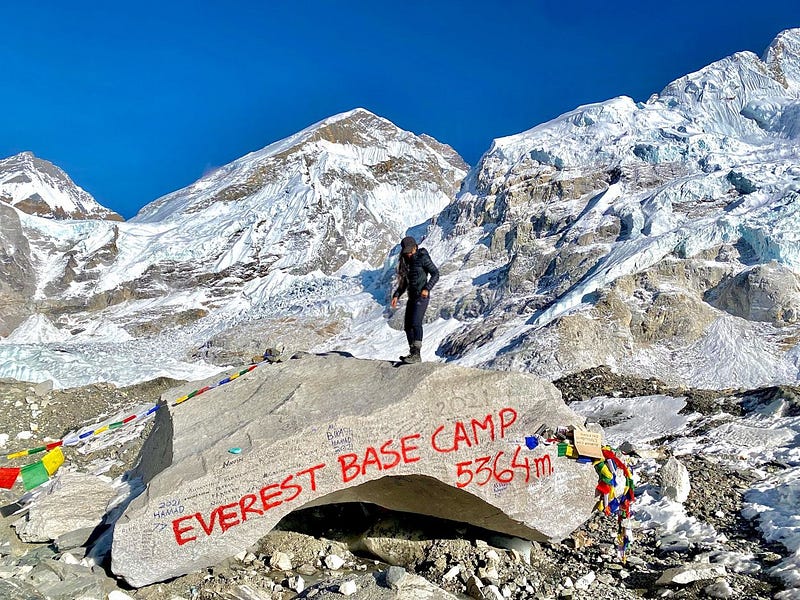
The path is rocky and slippery with boulders and snow to overcome. A grinding willpower will finally reward Everest Base Camp (5,364 meters), an unearthly emotional peak. The base camp is encircled by prayer flags, tents (during season), and the huge Khumbu Icefall. Stop and take in the view for a while, then go down again to Gorak Shep for the night.

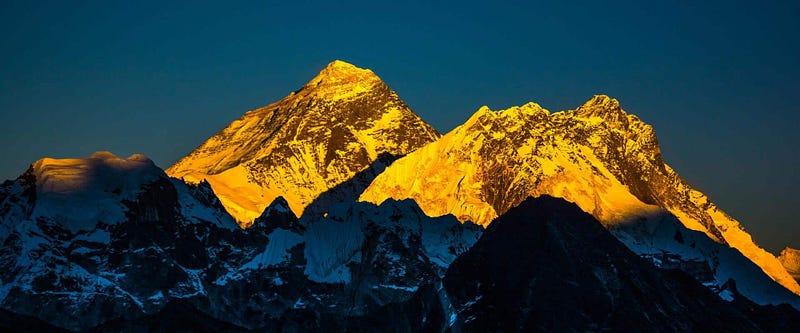
The most stunning picture was taken from Kalapatther while the sun is setting on top of Mt. Everest 8848.86m.
Sunset at Everest from Kalapatther

Day 9: Ascending Kala Patthar and back to Pheriche.

Early morning ascent to the summit of Kala Patthar (5,545 meters) for sunrise. The summit offers the best and unobstructed view of Everest, Lhotse, Nuptse, and Pumori. Golden early morning sunbeams on the high mountains are breathtaking. Then to Gorak Shep for breakfast and begin a return journey, a trek down to Pheriche (4,280 meters). Heaven is a lower elevation, and the trek is not so draining, even with tired legs.

Day 10: Trek from Pheriche to Namche Bazaar

The hike continues to Pangboche and Tengboche village, which are very welcoming ones, but now you’re moving in the opposite direction to them, so you have an added bonus to view them on the other side. You continue your walk through the woodlands and streams and view the Himalayan flora and fauna. You take an easy hour-and-a-half-long walk or walk-and-a-half and indulge yourself at the Namche Bazaar, where you pamper yourself with a hot shower as well as a steaming cup of coffee.

Day 11: Lukla, downhill trek from Namche Bazaar

The knee-jolting downhill trek on the last day from Namche to Lukla through Monjo and Phakding needs downhill and long-distance tires. Party time at Lukla. Rather than turning it into a party time, trekkers celebrate their trek by enjoying the farewell traditional dinner with guides and porters, food and local drink, and spreading smiles and laughter.

Day 12: Flight on the way back from Lukla to Kathmandu.

You return on the last day on a morning flight from Pokhara to Kathmandu. The return flight, also, is picturesque with birds’ eye views of the trek trail behind you. You’re free the rest of the day to relax, reflect, or bask in the hospitality and coffee culture of city life in the capital. The trek is over, er but memories linger.

When to Trek to Everest Base Camp?

Spring (March — May)-: Ideal time of the year for reliable weather, clear sunshine, blooming rhododendrons, and a crystal-clear view of the high mountains.

Autumn (September — November) -: Blue sky after monsoon, and dry trails with spectacular views.

Winter (December — February)-: Near-white snowy trails, and below-zero temperature. Only for the experienced trekkers, who are not shy to trek alone.

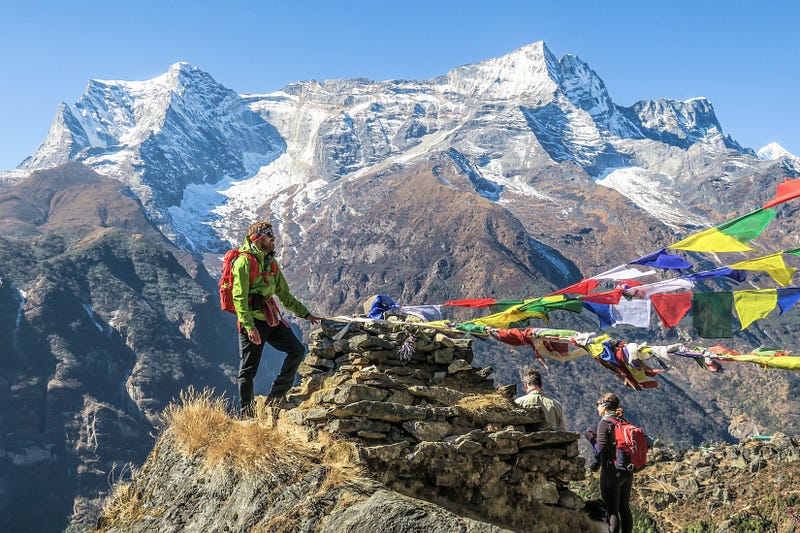
Happy Mountain Nepal Clints are enjoying the mountain view just above Namche Bazar 3440m, can see Kongde mountain on the Background
Mountain View Near Namche Bazar

Fitness and Training

Here it is, a step by step run through of the fitness training guide for the Everest Base Camp Trek, suitable for beginner and intermediate trekkers.

Train Minimum 2–3 Months Prior

1. Begin training at least 8–12 weeks.

Pre-trek. If you are not fit, there is a good chance that you will need to start earlier. The aim is to build and bank endurance and strength, topped up in growing quantities. By establishing a routine and consistent exercise regimen, you will physically condition your body for stresses and reduce injury on the trek.

2. Cardio

No matter what cardio you perform, it will strengthen your heart and lungs so that your body will be better at using oxygen, which at high altitude is a major factor.

  • Running builds legs and leg muscles.
  • Cycling is low-impact but great for endurance.
  • Swimming builds lung capacity and is non-impact.

Do 3–4 times a week and build up time and intensity as your fitness level builds. Attempt to do it in steady-state cardio but also attempt to fit in some hill repeats if possible.

3. Heavy Pack Backpacking

This is not merely walking on the treadmill with a heavy pack! Your hips, back, and shoulders will adapt to bear the load for hours: 5–10 kg.

Practice wearing a pack, or with water packed in. Add weight and duration walking gradually. Practice uphill and downhill walking, such as on actual walking trails.

4. Leg and Core Strengthening Exercises

You’ll be ascending steep rocky paths when you hike. Your legs must be conditioned. Squats, lunges, step-ups, and calf raises will all condition climbing muscles up and down.

You require a strong core (lower back, abs, glutes, obliques) to assist in supporting your posture and balance while backpacking. Do planks, bridges, and twists 2–3 times a week.

This will not only prepare your upper body to bear your pack but also ease the pressure off your back and give stability when walking on rocky ground

Permits Required

1. Sagarmatha National Park Entrance Permit

Cost: NPR 3,000 (foreigners), NPR 1,500 (SAARC nationals)

2. Khumbu Pasang Lhamu Rural Municipality Permit

Cost: NPR 2,000 (all nationalities)

Packing List

Gears are essential for trekking in Everest Base Camp in Nepal
Trekking Gear

1. Clothing:

  • Moisture-wicking base layers
  • Fleece and insulated jacket
  • Waterproof shell jacket and trousers
  • Warm hat, gloves, buff/scarf
  • Thermal socks and high-quality hiking boots

2. Gear:

  • Backpack (50–65L)
  • Sleeping bag (-10°C or warmer)
  • Headlamp and spare batteries
  • Trekking poles
  • Sunglasses (UV)
  • Water bottles/hydration system
  • Water purification tablets

3. Miscellaneous:

  • Sunscreen, lip balm
  • First aid kit
  • Snacks and energy bars
  • Power bank
  • Travel insurance at high altitudes

Cost Breakdown (Mid-Range Estimate)

1. Flights (Lukla–Kathmandu) $300-$400

The largest part of the cost of Everest Base Camp trek logistics is the flight from Lukla to Kathmandu. It’s a short but essential flight because Lukla is where the Everest region access begins. Return airfare will be $300 to $400. Flights also change with the season with higher months to trek, October and November being peak seasons. Flight duration is approximately 30 minutes but depends on weather and therefore can be delayed or even canceled. Since it’s a long flight and possibilities of interruptions are extremely high, it is better to stay an extra day in Kathmandu in case of a delay.

2. Permits $50–$60

You will require a series of permits to trek in the Everest region, which are obligatory.

They are two of the bigger ones, and they are Sagarmatha National Park Permit and TIMS card. They are the guarantee of monitored and secure access to trekking paths. The Sagarmatha National Park Permit is around $30, and the TIMS card is around $10 to $20. The two passes total around $50 to $60. These passes can be readily purchased before the trek in Kathmandu, or at the first settlements along the trail. It’s just part of having had your trek arranged and being regulation-friendly required.

3. Guide and Porter $300–$500

Although not obligatory, most visitors find it well worth the expense to have a guide and/or porter to help make the trekking experience all the more worth the while.

A guide costs $20-$30 a day and a porter costs $10-$20 a day, agency and season based. Guide and porter for 12–14-day trek will cost $300-$500. A guide who knows the trail, knows the culture, and is sensitive to altitude is worth every penny. Porter service will pack up your bags, removing some of the physical effort of the hike from your shoulders, especially where there is climbing or descending to reach it. These services are typically well worth the extra convenience and security.

A clint from Happy Mountain Nepalis enjoying her time at Everest Base Camp 5364m above sea level
Everest Base Camp

4. Accommodation (12–14 days) $150–$250

The accommodation on Everest Base Camp trek is usually in teahouses and the rooms are plain but clean. The accommodation for a 12–14 day trek is usually between $150 and $250. It is lower towards the lower section of the trek and the higher you ascend where accommodations are scarce. The rooms in teahouses are plain but with shared toilets and hot and dry. Additional privacy is provided by en-suite bathroom rooms at additional cost. The same accommodation in Kathmandu is the same price, but if you would like more comfort at the start and end of the trekking, more costly accommodation is possible.

5. Food and Drink $200–$300

Trail food and drinks are also a considerable cost. You will be consuming at least three meals — dinner, lunch, and breakfast — and snacks and drinks to get you through on the trail. Lower-grade trail food costs $5–$7 a meal, but the higher up you climb, the more expensive it is since there is a logistical problem with food transport up to higher elevation. 12–14 days’ worth of food and fluids costs $200–$300.

Oatmeal or bread makes up most of breakfast, and lunch and dinner consist mostly of local food such as dal bhat, noodle, or momo. Tea, bottled water, and snacks are expensive, especially having to eat at higher elevations.

6. Miscellaneous (Wi-Fi, Showers) $50–$100

Aside from the outrageous trekking fee, there are a couple others you will be paying along the way on the trek. They do have Wi-Fi in a few of the teahouses, but it’s extremely slow and it will be $2 to $5 per hour. Even a shower that’s hot will cost you money and will typically cost you $2 to $5 per shower.

All of these will be costly on the way while trekking and will usually cost you $50 to $100. Other trekkers also purchase other foodstuffs, drinks, or souvenirs on the way while trekking, so it is always better to carry some money with you. The need for these little luxuries is one of the reasons why the total cost of the trekking but can be what will make it worthwhile.

Conclusion

The Everest Base Camp Trek is not just about the destination — it’s about the transformation along the way. It’s about pushing your limits, connecting with the mountains, and immersing yourself in one of the world’s most spiritually rich and naturally stunning landscapes.

Whether you’re seeking a personal milestone, a cultural journey, or the adventure of a lifetime, the Everest Base Camp Trek delivers an experience that lingers in your soul forever. Contact us today at Happy Mountain Nepal, on Facebook, Instagram, or TikTok.

Tuesday, May 20, 2025

Manaslu Trek: A Rewarding Trekking Destination


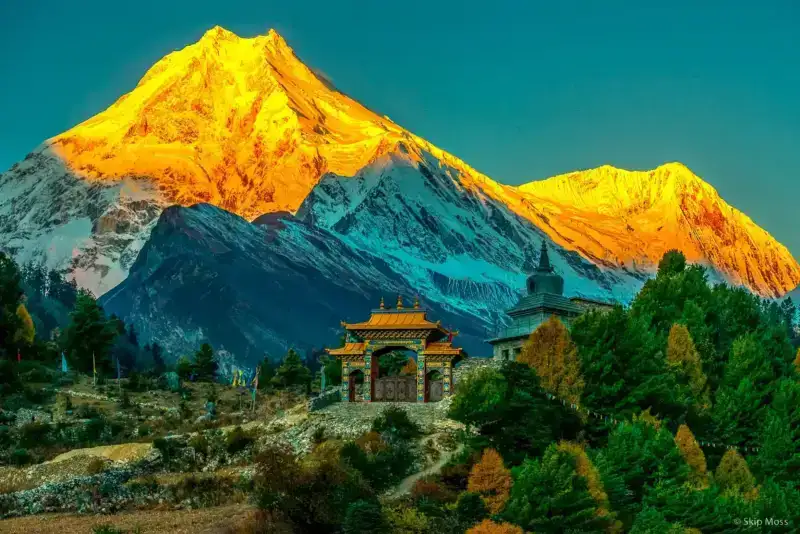
Sunrise over Mt.Manaslu 8163m

Manaslu Circuit Trekking Guide is Nepal’s most off-the-beaten-path yet most rewarding hike, and with all of the Himalayan glory without the throngs of more straight-up hikes like Everest Base Camp or Annapurna Circuit. It circumnavigates stunningly beautiful Mount Manaslu (8,163 m), the world’s eighth-tallest mountain, with its uplifting landscape, rich wildlife, and well-documented history.

Breathtaking Landscape Of Manaslu Trek

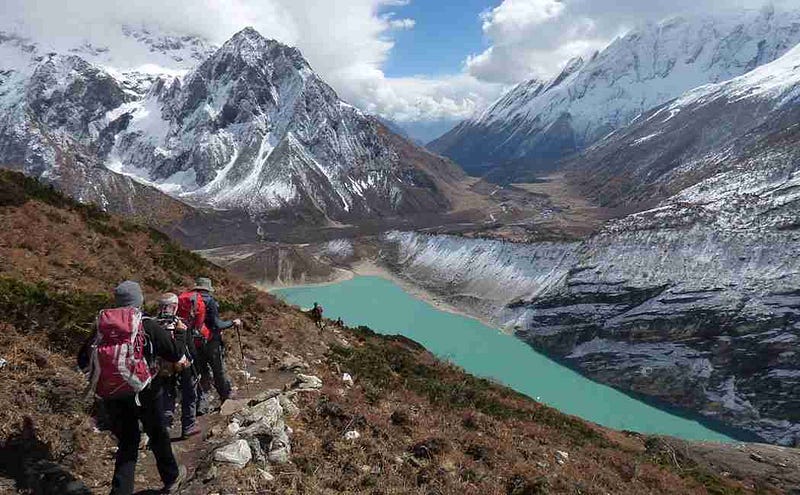
A varied landscape is experienced in the Manaslu Circuit from the gigantic sheer ridges and alpine pastures to the low valley’s terrace fields and subtropical rainforests. Trekking transports one through gorges of the Budhi Gandaki River and subsequently to Larkya La Pass (5,160 m) — Nepal’s highest and most stunning mountain passes with staggering altitude. On the way, one can see the panoramic view of Mount Manaslu, Himalchuli, Ngadi Chuli, and other white mountains, and the horizon. Why Manaslu Circuit Trek?

Fewer “trekked,” to trek the Annapurna Circuit — re-trek, re-trek-and-re-trek again, for the Everest Base Camp trek. Paradise of Nature — from the world’s highest climbing passes to rainforest subtropics — and the adventure of in-your-face monasteries and villages, Tibetan-style. Part of the reason why Manaslu Circuit is one of Nepal’s most popular trekking holidays:

As might be anticipated, this is a longer explanation of what one will find within each experience, so people will understand that the Manaslu Circuit Trek in Nepal is worth doing:

1. Fewer tourists than in tourist areas

There are many fewer tourists on the Manaslu Circuit than tourists at most major tourist destinations, such as Everest Base Camp or Annapurna Circuit treks.

This is also owing to the fact that it is a closed district, and therefore you will need a special permit and a licensed guide. You will hence be unlikely to spot tourist hordes, tourist hordes waiting at queues of teahouses, or tourist commodification base camps here. Remoteness will give you the peaceful trekking experience whereby you will get a chance to behold the peace and intimacy of the Himalayas with no interruption.

2. Evasive contact with the indigenous Gurung and Tibetan

Manaslu is a blend of indigenous ethnic Gurung and Tibetan-Buddhist inhabitants, living in a primitive state.

Old monasteries, prayer flags, mani walls, and yak herders give one a glimpse of centuries-old Tibetan cultures making their way through villages such as Lho, Sama Gaun, and Samdo. People here are kind and extremely welcoming, easily inviting strangers into homes or teahouses. You’ll witness monastic rituals, sample local foods like tsampa and butter tea, and hear the hum of chants echoing from monasteries high in the hills.

3. Remote landscapes with pristine views

The Manaslu Circuit trek is one to leave you agog, a trek that starts at the craggy gorge of the Budhi Gandaki river (lower side) and goes on through onto the glacial Larkya La pass (5,160 m) on the higher side. The trek is an eyeball slideshow of all you wish for the Himalayas. You ride up and down along green jungle, walk across suspension bridges over torrent rivers, and ascend up through white-capped peak-fringed glacier valleys. You catch glimpses of Mount Manaslu, Himalchuli, Ganesh Himal, and Ngadi Chuli — Himalayan giants. Since it’s not touristy anymore, the scenery is completely unspoiled, and you get that great feeling of being in a far-off and non-touristy Himalayan country.

4. Challenging and varied terrain

The trek doesn’t just offer scenery; it tests your capabilities to trek. On a quite straightforward direction hike, you’ll be gaining immense altitude on very steep terrain, and that is as much acclimatization as it is endurance. The hike has seen it all: rock step, field terracing, forest road, rock crest, to cross-altitude. The coup de grace is the Larkya La Pass — an uphill slog, most likely in the snow, and stunning vistas down the Manaslu range and the Annapurnas.

5. Incredible biodiversity within the Manaslu Conservation Area

The trek passes through the Manaslu Conservation Area, a protected area which is also one of the largest and most varied ecosystems in itself. Tours along lush canopy forests of pine and rhododendron with a supportive variety of avifauna at lower altitudes.

Breathtaking diversity of threatened Himalayan wildlife and vegetation inhabits his region. Encounters of Himalayan tahr, blue sheep, and snow leopards have all been had at least. Once the area is famous for medicinal herbs and has been reported to have over 110 bird species, and an innumerable number of butterflies and reptiles for nature enthusiasts to relish.

Trek Overview

  • Duration: 14–18 days
  • Altitude: 5,160 meters (Larkya La Pass)
  • Difficulty: Moderate to Difficult
  • Best Climbing Season: March–May, and September–November
  • Permits: Restricted Area Permit, Manaslu Conservation Area Permit (MCAP), and Annapurna Conservation Area Permit (ACAP)

Getting There: Starting the Journey

Your journey begins with a scenic drive from from Kathmandu to Soti Khola or Machha Khola through countryside villages. The river along which you will be trekking is born in the district of Gorkha, homeland of the Gurkhas. The trek is a uniform climb over uniform slopes of forest, waterfall rock faces, hillside pasture ridges, and terraced farms with good views of the villages.

Day-by-Day Highlights

Day 1–3: Jagat to Machha Khola

Lower sections of the trails are through jungles, suspension bridges, and warm riverside villages. You´ll be camping at Tatopani, which is well-known for hot springs, and Jagat, officially the beginning point of the Manaslu Conservation Area and a UNESCO village.

Day 4–6: Namrung to Jagat

The drama level reached here is gorges, cliff-hanging paths, and the Tibetan Buddhist cultural way of life is added to. Surrounding all the while with varieties of stone chortens, mani walls, and prayer wheels. Namrung village is an appropriate acclimatization place, and nice vistas of Mount Ganesh Himal and Mount Himalchuli await you.

Day 7–9: Samagaon to Namrung

With every step up, there is an opening out to Alpine meadows and snow-tipped summits. Lho village’s finest view of Manaslu and picturesque Ribung Monastery is the most photogenic section of the trek. The trek continues to Samagaon village with distinctive culture and welcomes the Pungyen Gompa and acclimatization day hike to Manaslu Base Camp (4,800m) or Birendra Lake.

Day 10–11: Samagaon to Samdo

As you ascend the ridgeline past tree line and into more remote country, Samdo, which is the highest of any year-round village in the region, so a fine place to take a break before the physically strenuous portion of the trek, the Larkya La Pass.

Day 12: Larkya La Pass (5,160m)

It is because of this that you have come to witness: the Manaslu Circuit. Returning from a challenging and arduous trek to Larkya La Pass, looking back over your shoulder at the majesty of high-mountain peaks, Himlung Himal, Cheo Himal, Kangguru, and the view of Annapurna II is breathtaking. Your descent is to Bimthang, where you can relax in an unspoiled valley.

Day 13–15: Steep Down to Dharapani

The trail gradually descends through rhododendron forest and ancient Gurung villages like Tilije and Dharapani, where you will be on the Annapurna Circuit coming down to Dharapani. You will ride a jeep or bus from there back to Kathmandu.

Yes! Your Cultural Encounters along the Manaslu Circuit Trek are rich and deep in numerous ways.

Cultural Encounters on the Manaslu Circuit

Perhaps the best thing about Manaslu Circuit trekking is seeing embedded living cultures in the Himalaya. More developed trekking areas have examples of sanitized flashes of rural culture. Manaslu offers raw photographs of living traditional cultures, which seem to have been less affected by recent development.

Two Major Ethnic Groups

1. Gurungs in the Lower Hills

You have already begun trekking at lower elevations — Soti Khola villages, Machha Khola village, and Jagat village — and are already trekking on the route to Gurung village. Gurungs are indigenous inhabitants with an:

  • Agricultural lifestyle: Terracing cultivation, pastureage, and village-level trade
  • Express tradition and language
  • Physical proximity to nature and animist spirituality, which is typically typical of Hinduism or Buddhism
  • They share a proud military tradition with the British and Indian Gurkha regiments.

Nepali rural life embraces the villages, and the creaking door is flung open in a smile, and rural life is given.

2. Nubri and Tsum People in the Upper Valley

As you walk along to Lho, Sama Gaun, Samdo, and a little further beyond, you are amidst the Tibetan-inhabited Nubri and Tsum valleys. They use Tibetan languages, wear traditional Tibetan clothing, and live in stone houses built in a way to eliminate the mountain cold climatic influences.

  • It’s all actually controlled right up to the very last place by Tibetan Buddhism, and it permeates all aspects of life. You will find
  • Town and local citizen-ornamented Mani stones and town wall prayer wheels adorned with Buddhist mantras such as “Om Mani Padme Hum”
  • Gateway and chortens (stupas) standing at the cusp of the spiritual, religiously demarcated: atop hills, or over even towns.
  • And a couple more stunning monasteries, like those looming over Lho’s Lho or the Sama Gaun town.

These monasteries are worth the journey alone for hillside scenery and religious ritual, painting,g art, and devotion.

Daily life and spiritual practice

Religion is an integral part of life here in the hill towns. You will see:

  • Monks and nuns reciting mantras or performing rituals
  • People moving hand to hand or chortens spinning prayer wheels as a regular religiosity
  • Every-colored prayer flags blowing across tops and passes, supposedly swept away on blessings by the wind

It is rich in experience to walk around the area at festival time — i.e., Lhosar (Tibetan New Year). Festivals are:

  • Cham, monk in mask’s evil-warding dances
  • Drumming, conch shell, she’ll, and horns
  • Socializing, feasting, and singing in the open courtyard
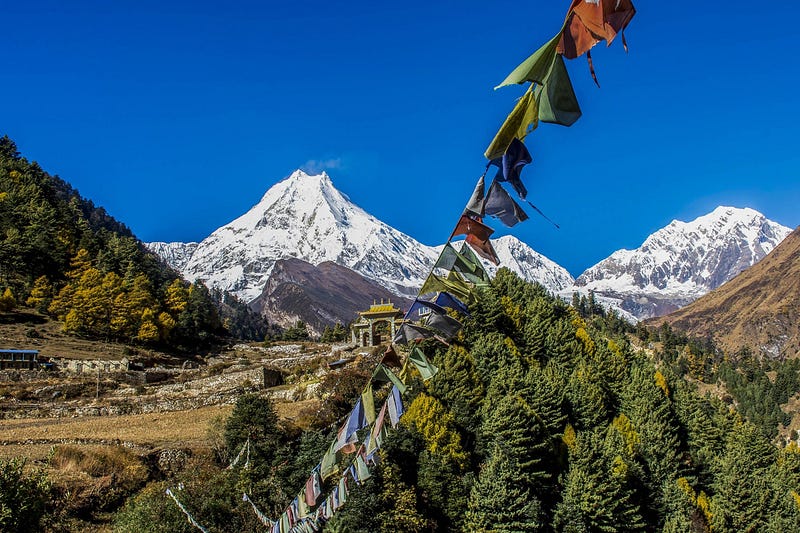
Manaslu on the background from shyele Village

Permits and Regulations

The Manaslu area is a restricted zone, and thus, you’ll require a registered trekking agency and a minimum of two trekkers accompanying you to obtain permits. The following are the ones that you would require:

Manaslu area being a restricted zone, the following permits would be required:

1. Restricted Area Permit (RAP)

  • Issued by the Government of Nepal
  • Minimum of two trekkers and a licensed guide

The fee varies by season:

  • September to November: USD 100 for the first 7 days, USD 15 per day thereafter
  • December to August: USD 75 for the first 7 days, USD 10 per day thereafter

Manaslu Conservation Area Permit (MCAP)

  • Fee: NPR 3,000 (approximately USD 25)

2. Annapurna Conservation Area Permit (ACAP)

Necessary since the trail ends in the Annapurna region

Fee: NPR 3,000 (approximately USD 25)

Note: Trekkers do not need a TIMS (Trekkers’ Information Management System) card for the Manaslu region.

Best Time of the Year to Trek the Manaslu Circuit

1. Spring (March to May)

Rhododendron blooming season, ideal weather, and great views. The best season for photographers and nature enthusiasts.

2. Autumn (September to November)

Ideal time for the Manaslu Circuit, with ideal weather, clear blue skies, and dry trails. Best season to cross high passes.

3. Winter and Monsoon

Avoid the monsoon months of June–August because of landslides and bad weather. December to February is bitterly cold, and Larkya La Pass can be snowed over.

What to Take on the Trek

Such a high and such a remote trek deserves good gear. The following gear must be carried:

  • Layered clothing (base, mid, and shell layers)
  • Insulating layers anda down jacket
  • Gaiters and strong trekking boots
  • Sleeping bag (-10°C rated or colder)
  • Water purification tablet or filter
  • Headlamp, trekking poles, sunglasses
  • Altitude drug in the first-aid kit
  • Snacks, energy bars
  • Reusable water bottle

Accommodation and Food

You will be sleeping in teahouses — small, locally run lodges that offer simple accommodations and good food. Not luxurious by any stretch, but warm, and the welcome is warm.

Meals typically include:

Dal Bhat

Dal Bhat is Nepali staple cuisine and consists of steamed rice, lentil soup (dal), and seasonal vegetables, fresh in nature. Pickles, and sometimes meat, is consumed at lower altitudes. Dal Bhat is energy and nutrient-providing food and thus the best during treks of long durations. Unlimited refills is the norm at most tea houses and thus a trekker’s favorite dish.

Tibetan Bread

Tibetan Bread, a flat fried bread that is crispy on the outside and soft in the middle. Eaten every day with jam, honey, or eggs for breakfast. Filling, tasty, and gives instant energy. Found everywhere on the trekking trail.

Momos

Momos are vegetable, meat, or cheese-filled dumplings served with hot sauce. They’re the staple light meal or snack of the mountain people. Served steaming and hot, they’re an ideal lunch for a quick bite. Vegetarian momos are more readily available at higher altitudes.

Noodles and Pasta

Chowmein (noodle fry), thukpa (noodle soup), and pastas like spaghetti are on the trek. They are freshly prepared with vegetables or occasionally with meat. Thukpa is very comforting on cold days. They are light to digest and just right for a fill-up.

4. Porridge and Pancakes

Staple breakfast porridge is prepared using oats or corn flakes and consumed with fruit. Flavored pancakes, apple, banana, or regular ones, are consumed with jam or honey. They are refreshing and light. They’re warm, quick to prepare, and quick to transport anywhere.

5. Eggs and Toast

Boiled, scrambled, or as omelets, eggs are simple but delicious and served with chapati or toast. It’s a sure-shot breakfast of protein and carbs. Toast with cheese or jam can be served in certain lodges. It’s a sure thing, a favorite of most trekkers.

6.Hot Drinks

Hot drinks are black tea or milk tea, ginger, lemon, or mint tea, and instant coffee. Lemon with honey is comforting and very common at high altitudes. Hot chocolate or herbal teas can be found at some places as well. The best to be hydrated and warm on the trail is these drinks.

As you ascend, food variety decreases and prices increase due to limited transport access.

Accommodation on the Manaslu Circuit Trek

Manaslu Trek lodges are basically tea houses, small family homes. Basic, although some of the bigger villages offer a mid-range level of comfort. The tea houses offer a warm bed to sleep on, some porridge to eat, and some other trekkers to chat to. They are a local culture trekking community.

Rooms

Twin rooms are dormitory-style and have wood beds, foam mattresses, pillows, and woolen blankets. Twin rooms are not insulated and do not have indoor heating, so twin rooms become freezing cold at night. It is better to bring a waterproof sleeping bag. The room space is not roomy, but sufficient for sleeping.

Toilets

Toilet facilities vary from high to lodge level. Western flush toilets are at lower levels. Squat toilets and communal toilets are what you will find higher up. You’re better off carrying toilet paper and sanitizer with you.

Hot Showers

They do have showers at some of the tea houses. They are sun or gas-heated showers and will cost an extra $2 to $5. Hot water or maybe no hot water at high elevation, since it will freeze.

Electricity & Charging

Power is usually available in most villages from the national grid or solar panels. Recharge is usually extra charge per device or per hour. Power banks or solar chargers are a backup, which keeps you online without having to use lodge facilities.

Wi-Fi

Wi-Fi is spreading to places such as the village of Samagaun, Lho, and Namrung. It is going to be slow, unreliable, and not even worth paying extra money for as an option. Some of the trekkers do not even require the internet and have only scenery to gaze at from the surroundings.

Dining Area

Each of the tea houses has a dining room, normally the least formal room in the house. All of them have a bukhari stove in the middle, which is lit in the evenings to heat up the room. The room is not just used for eating but for relaxation, conversation, and planning tomorrow’s excursion.

Physical Preparation and Acclimatization

The hike is a strenuous, steep climb and high altitude. Prepare yourself in the following way:

  • Begin preparation at least 2 months earlier
  • Backpack trek
  • Get your heart, body, and endurance conditioned via cardiovascular, strength, and endurance training.
  • Train to identify altitude sickness
  • Acclimatize wisely — rest and drink water in abundance
Birendra Lake in Manaslu Circuit Trekking

Responsible Trekking in the Manaslu Region

This remote region is vulnerable ecologically and culturally. Be a responsible trekker by:

  • Not carrying refillable bottles of water in plastic
  • Proper disposal of environmental waste
  • Not being offensive to the local culture,a nd first seeking permission to photograph
  • Having meals at the local teahouses and buying local handicrafts
  • Employing local porters and guides for community development

Conclusion: Why Manaslu Is a Life-Changing Trek

Manaslu Circuit Trek is not a human body odyssey alone, but an odyssey of faith and culture too. Without anything more than stunning views of mountains, abundant culture, and an atmosphere of untouched wilderness, it’s one of Nepal’s greatest trekking sagas. If you seek a manner that is long and distant, secluded, Manaslu calls you to your subsequent Himalayan odyssey. Contact us today at Happy Mountain Nepal, on Facebook, Instagram, or TikTok
Sunday, May 18, 2025

Kathmandu, Pokhara, Chitwan Tour: Discover the Golden Triangle of Nepal

 As varied as Nepal’s culture is, its geography. Thousand-year-old cities and a thousand temples, peaceful lakes, and uncharted jungles for all the trekking folks here, too. Kathmandu Pokhara Chitwan Tour, or simply referred to as Nepal’s Golden Triangle, is Nepal’s gem and Nepal’s most diversified tour package. Kathmandu, Nepal’s capital city, is the destination point; Pokhara and the hills, and Chitwan National Park, are interesting short travel itineraries.

This is the most favorable tour package for all those visitors who desire to witness the nature, culture, and wildlife of Nepal in a single tour. In this blog, we are discussing a 7-day tour package, all the attractions and activities of these three locations, and why these three locations are interdependent and can be combined and organized to create a thrilling tour in Nepal.

Pokhara

What Is the Kathmandu Pokhara Chitwan Tour?

Kathmandu Pokhara Chitwan Tour is Nepal’s traditional back journey and presents the travelers with three completely different faces of Nepal. Each one generates its own individuality — city life and culture of Kathmandu, hill and scenery of Pokhara, and jungle and wildlife safari of Chitwan. The three combined offer the essence of a back journey.

Highlights of the Kathmandu, Pokhara, Chitwan Tour are:

1. Kathmandu — The Living Heritage City

Kathmandu, the capital of Nepal, is a special living heritage city with ancient monuments all around. Shrines and old temples are observed in city streets, nearly in every square and corner. Kathmandu’s Durbar Square, Pashupatinath temple, a sacred Hindu temple, and Swayambhunath (the Monkey Temple) and Boudhanath, a Buddhist stupa, are heritage sites. The roads shake, the temples reach for the skies, and city sounds fight the air — chanting, clanging bells, and pilgrimages in sheer abundance. Thamel is the tourist slum, and rainbow shops and cafes’ center and cultural festivals. Kathmandu is religious and heritage saturated as well, something which will surprise the visitor amongst Nepal facts. The city tour is, therefore, an excellent idea to start your Nepalese experience.

Kathmandu Durbar Square

Key attractions in Kathmandu:

1. Kathmandu Durbar Square

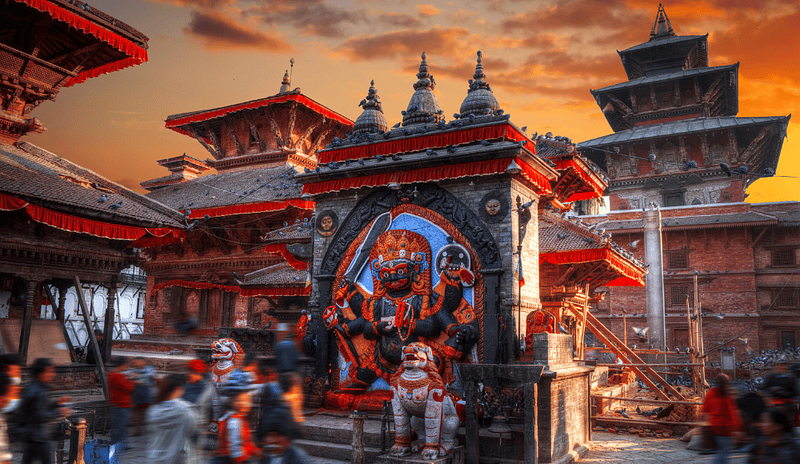
Situated in the very heart of the old city is the Kathmandu Durbar Square, one of the finest sites of the royal palaces of the Kathmandu Newar architecture and art. The temples, palaces, and courtyards of the square tell tales of the glories of the past of the kingdom, some parts of the structures having been constructed during the times of the Malla kings, the long-lost rulers of the Valley of Kathmandu. Among the most famous landmarks and monuments of the square are the gigantic Hanuman Dhoka Palace, Kumari Ghar (residence of the living goddess), and Taleju Temple. Although most of the structures were severely damaged in the record earthquake of 2015, it is still a hub of culture and spirituality deeply embedded in the city and the nation’s history and heritage, along with Nepal’s architecture and art.

2. Swayambhunath (Monkey Temple)

Swayambhunath (Nepali Monkey Temple) is Nepal’s and Kathmandu’s oldest and most historic sacred place, and one of the most lively.

The Buddhist stupa temple is located on a hill, and from there, there is a great view of the Valley of Kathmandu. The white great dome, golden spire, and all-seeing eyes of the Buddha represent enlightenment. Though it’s the only religion to worship before the stupa, Hindus also pray there, and pilgrims in thousands daily have a procession lighting the butter lamps, rotating the prayer wheels, and donating a small amount of money. It is on the religious harmony backdrop amidst tabloid hysteria, so it’s a ‘hot’ place to gain enlightenment.

3. Pashupatinath Temple

Pashupatinath Temple is Nepal’s most sacred Hindu temple, which is dedicated to Lord Shiva in the guise of Pashupati: The animal protector.

It looms over the Bagmati River, a holy river and center of which is a gigantic temple, ashram, and ghat complex. Pashupatinath is also renowned for its street cremation pyramids; Hindu death rites are performed daily on the Bagmati ghats. Although non-Hindus are forbidden within the temple grounds, witnessing the ceremony as part of the procession around the grounds is an excellent glimpse into Nepalese spirituality, rituals, and respect for death.
The trip will be remembered for the next few decades.

4. Boudhanath Stupa

Boudhanath Stupa is one of the largest and most stunning of the stupas, as well as a Nepalese Buddhist pilgrimage, you visit in the world.

The stupa itself is an enormous white monolithic dome topped by an enormous golden spire surmounted by the enlightened eyes of the Buddha, symbolizing loving kindness and wisdom. It is encircled by a circular square in the center of which Tibetan monasteries, shops, and restaurants are found. Buddhists pray by circumambulating clockwise around the stupa with rotating prayer wheels and mantras. It’s particularly busy on Buddhist festivals, but Boudhanath is a peaceful, if very spiritually intense, place.

5. Thamel

Thamel is the most popular tourist destination in Kathmandu and has everything anyone might ever want.

It is never quiet and boasts vibrant streets lined with restaurants, shops, guesthouses, plenty of trekking shops, art galleries, music shops, and boutiques.
It is Kathmandu’s tourist center, frequented by tourists weekly or fortnightly, and more seasoned trekking tourists constructing the Himalayas. While unlike the omnipresence of contemporary tourism, remnants too exist of older understandings of existence in temples, cloth-draped and behind doors, in local restaurants. Thamel is where live music, street life, souvenirs, and tourism in general occur.

2. Pokhara — a tranquil Himalayan stunning nature retreat

Pokhara is a laid-back lakeside resort town surrounded by massive Annapurna (Himalaya) mountains, and where not only is it possible to leave the madness of Kathmandu far, far behind you, it’s actually quite literally an option. It is renowned in itself for its own natural beauty, and it has the stunning Phewa Lake, which guests visiting tourists boat across as they just sit and look up in awe at the white snow-capped Machapuchare (Fishtail) mountain.

Sunrises are stunning. Sarangkot sunrise places are a dreamer’s paradise, and in the daytime, you get a glimpse of the World Peace Pagoda, a view of the peaceful beauty of Devi’s Fall, and looking down at the world under the shadow of Gupteshwor Cave. And if one is adventurous, there is paragliding, zip-flying, and trekking through the hills of the city. Pokhara is the perfect place for relaxation, de-stressing, and soaking up the Nepalese countryside and Himalayan views.

Pokhara Valley from Pumdikot

Key Attraction

1. Phewa Lake

Phewa Lake is a peaceful paradise that surrounds the town with its lake shores. You can have peaceful water or stunning views of mountains; on most average days, you can promise yourself to get to catch a view of the lovely Machapuchare (Fishtail Peak) and marvel at the face of the lake.

You can actually boat, kayak, and paddle inside the lake and even visit the Tal Barahi Temple, a small religious Hindu temple, which is revere on the boat, located in the middle of the lake. And to nature’s calmness, Phewa Lake is just that, either to view sunset at the lake boulevard or paddle quietly inside the lake.

2. Sarangkot

Sarangkot is the most crowded hilltop tourist spot, near the Pokhara city center. Sunset, especially on Annapurna and Dhaulagiri summits, is world-renown for being spellbinding as much as appearances go. They like to reach late night so that they could get the very first ray of sun to kiss the hill tops so that they shine as they are getting golden, light, and white.

Not only sunrise location but also Nepal’s best paragliding location where paraglider will be flying over the lake and Pokhara and hills will be your background. Nature clad and mini adventure sport, wonder Sarangkot is viewpoint en route to Pokhara.

3. World Peace Pagoda

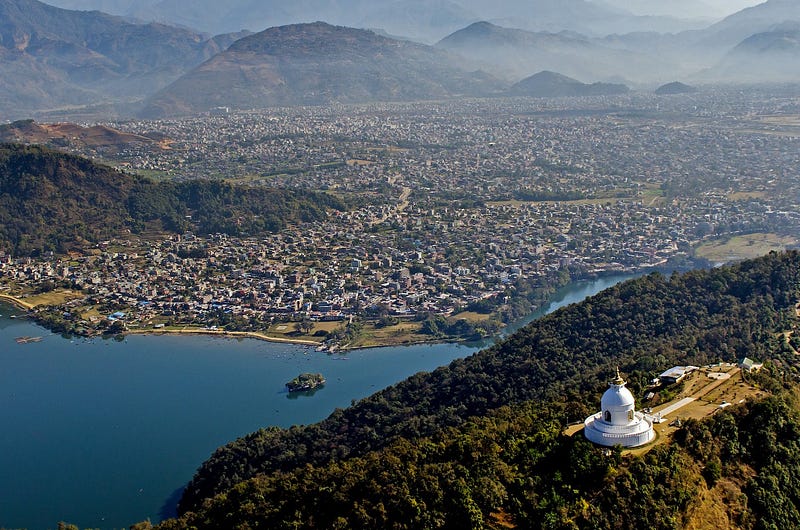
World Peace Pagoda is a stunning white, glittering stupa monument far back on a ridge in Pokhara Valley. It is construct by Japanese Buddhists as a war memorial of peace and glows with stunning 360-degree views of Phewa Lake, Pokhara city, and the Himalayas. And while the Pagoda itself is simple and room is allowed to walk and take it in, there is also fun to the extent of visiting the monument as close as you can walk, drive, or boat, and trek to the point on the ridge.

4. Devi’s Fall and Gupteshwor Cave.

Devi’s Fall, or Patale Chhango as it is known to locals, is a spook waterfall where the falls drop down into a gigantic underground tunnel. Devi, religiously speaking, was a guest who was unwillingly drag away, and that is refer to as the fall. Its opposite is the Gupteshwor Cave, the most visited underground cave in Nepal. Inside the cave lies a Lord Shiva temple and the breathtaking view of Devi’s Fall once more, as it leaps onto the rock below. It is myth and nature, and enigma, covering its face and presenting tourists with two but not one view.

5. Mountain Museums

Pokhara International Mountain Museum provides an abundance of Nepal’s mountaineering history, Himalayan culture, and natural history. History of ascending Mount Everest, display of Nepalese traditional clothing and equipment, model Himalayan Mountain landscape display, Nepalese ethnic community and way of life depictions, i.e., Sherpas, Gurungs.

Ease of learning Nepalese mountaineering history, what it did not achieve, and what it did. There are one or two other local museums, such as the Gurkha Museum, um with some of the local and military history of the region. Always tranquil, always serene, and scenic views. You can get your city and local shoot done, or me time. Whatever you spend doing in the Pagoda or otherwise, there is that spiritual bonding and connection with nature.

3. Chitwan — Jungle Adventures and Wildlife Wonders

The truly sub-tropical lowland of Chitwan of Wild Nepal shelters the beautiful Chitwan National Park, a World Heritage Site, that abounds with wildlife. Tourists can also go for jeep safari or boat cruises to jungle safaris provided to them in Chitwan, which provide sites to see highly endangered animals such as the one-horned rhinoceros, Bengal tiger, sloth bear, crocodiles, and over 500 birds! One can visit the Tharu villages and Tharu on a cultural village tour and get familiar with the culture of one of the oldest members of Nepali society. And if elephant breeding camps, jungle treks, and sunset over the river are not enough, Chitwan provides the hard-and-harder tourist’s alternative for the final day of a tour.

Chitwan attractions:

1.Jungle Safaris

There can’t be any Chitwan vacation without traversing the Chitwan National Park jungle safari.
That’s why we’ve reached Nepal’s subtropical jungle!

On either a jeep safari or the quietness of a canoe tour across the peaceful Rapti River, you see animals where they are suppose to be. Chitwan National Park is a sanctuary for the near-extinct one-horned rhino and the reclusive Bengal tigers — you catch sight of sloth bears, wild elephants, and sun-basking gharials in the wetland! Such are the experiences when you hike through the grasslands and sal forests that the experience is the best, at a time when you are searching for such elusive species that it’s paradise for nature enthusiasts.

2. Elephant Breeding Center Sauraha

One of the breeding centers of a conservation project, the Elephant Breeding Center Sauraha is involve in breeding and conserving domesticated elephants of Nepal.

Tourists are able to view elephants of all ages safely and responsibly, even naughty young calves. The Elephant Breeding Center not only informs tourists of the life, habitat, and social life of elephants but also the public (and tourists)about best practices in wildlife management. It’s an eye and heart experience for children and nature lovers.

3. Bird Watching

Apart from safe and prudent animal migration, Chitwan is a paradise for bird watching. Over 500 species of birds have been found there, and some birds within this region are simple world-famous; i.e., the kingfishers, queen of birds, hornbills, herons, and egrets.

Some migratory birds like the Bengal florican are vagrants. They also offer some guided early morning bird walks with local naturalists, which take you to the riverbanks, wetlands, and forest edges where birds are most active. Birding is not only an explosion of color but a hair-tingling sound and spectacle too. Birding can be one that is laid back, where you just chill as an experience of unparallel biodiversity. Even a temporary halt, and the most enthusiastic bird enthusiast can’t help but long for bird watching.

4. Tharu Culture

Tharu Culture is a more culturally enrich and richer experience of one of the Nepalese tribal traditional ways of living. Tour of Tharu village, mud-plastered houses, wall paintings, local natural surroundings, and fruits. Cultural evening shows, some dynamo Tharu stick dance, and people’s songs educate them about their life, their history, and about culture. People all around you, people’s culture known, and off the beaten path, it is a wonderful cultural experience and a richly enriching learning experience about culture and indigenous people.

5. Rapti River Sunrise.

River Rapti is precisely such a lovely spot to unwind at nightfall after a day of trekking in the forest. It would be about dusk time, and hence the river would be bathed in golden sunlight as it winds its way out towards bathing pachyderms and birds descending to roost.

It’s a relaxing cruise to unwind, and one finds peace most deeply through gigantic throngs of tourists visiting here to soak in the quiet of riverbanks or town cafes with a hot cup of local tea and peaceful, unhurried canoeing. The sort of everyday scenery in your sight becomes attuned to the body and turns out to be an otherworldly and peaceful build-up of Chitwan’s land safari.

Suggested 7-Day Itinerary for Kathmandu Pokhara Chitwan Tour

Day 1: Arrive in Kathmandu

You will be greet at Tribhuvan International Airport by your guide or hotel representative. Rest if needed, and hotel transfer. Maybe walk to Thamel, the tourist hub of Kathmandu. Thamel is well serve by restaurants, cafes, shops, and even cultural sites to visit. Depending on the time, can view live cultural show in the evening with Nepali traditional dinner.

Day 2: Kathmandu Culture Tour

Day two starts with day guided tour of the UNESCO World Heritage Kathmandu Valley. The day starts with Swayambhunath Stupa (Monkey Temple), an old Buddhist temple where you walk among the remains of a Buddhist sacred place and are treat to sights of Kathmandu. Then, Pashupatinath Temple, Nepal’s most sacred Hindu temple, is where you can witness holy cremation before Lord Shiva and the Bagmati River. Then on to the Next Boudhanath Stupa, the world’s largest stupa and the Tibetan Buddhism capital of Nepal. And last but not least, you will visit Patan Durbar Square, such as an ancient temple, a century-old red brick, and a masterpiece.

Day 3: Drive or Fly to Pokhara

Fly or drive from Kathmandu to Pokhara, lake town of Phewa Lake and entry point of the Annapurna Himalayas. Drive via scenic roads (6–7 hours depending on road conditions) or hop on a short domestic flight (25 minutes). Check-in at your hotel and enjoy the evening strolling along Lakeside Pokhara with its relaxed cafes, earthy shops, and Phewa Lake views.

Day 4: Pokhara Tour

This would be looking forward to starting your day with an early morning trek to Sarangkot at about sunrise time to witness sunrise over the picturesque Annapurna, Dhaulagiri, and Machhapuchhre (Fishtail) ranges from a vantage point atop a hill overlooking Pokhara.You would have a day’s city sightseeing Pokhara city tour of Devi’s Fall, Gupteshwor Mahadev Cave, and the International Mountain Museum detailing Nepal’s mountaineering history. You may choose to boat Phewa Lake and reach the Barahi Temple island in the afternoon. If an adventure sort, there is paragliding, zip line, or even an ultralight plane flight if adventure beckons!

Day 5: Chitwan Tour and Tharu Culture

Drive from Pokhara to Chitwan, 5–6 hours of lowland jungle through hill country. Arrive at Chitwan and drive to your jungle lodge or an ecotel-style eco-lodge. Evening Tharu village tour and view the local aboriginal natives, and end with a Tharu cultural dance to represent music and lifestyle culture.

Day 6: Jungle Tour of Chitwan National Park

You will be out all day on a tour of Chitwan National Park. A World Heritage Location, Chitwan is a game park paradise. You ride out in a jeep or elephant-back safari and can spot all manner of wildlife. You will witcness one-horned rhinoceros, sloth bear, wild boar, and, if extremely fortunate, a Royal Bengal tiger. Or paddle down the Rapti River and watch for crocodiles and water birds. And then followed by an Elephant Breeding Centre tour and a half-hour jungle trek with an introduction to bird life and forest vegetation.

Day 7: Return to Kathmandu

You will be drive back to Kathmandu today, or fly back to Kathmandu. At Kathmandu, you can spend your last day at the capital city either shopping for souvenirs in and around Thamel, or simply relaxing before departure. Here, your Golden Triangle Tour ends with memories in your heart.

How These Kathmandu Pokhara Chitwan Tour Connect

Kathmandu–Pokhara–Chitwan tour is a loop experience tour of Nepal. This showcases the geographical, cultural, andexperientiale richness of Nepal in a composite way. The three places are near to each other so that one may be transform to the other in a short period of time. These are ecologically and culturally unique from each other. They may provide the tourists diversified experiences in a short period of time.

As might be anticipate, Kathmandu to Pokhara to Chitwan starts with Kathmandu. In Nepal’s cultural capital center, royal courts and ancient temples, religious heritage, and institutions of culture are an appropriate acclimatization to Nepal’s longer culture. After a series of rounds of all the interests of Kathmandu. The tourists can fly or drive west to Pokhara. The lakeside town of peace, renowned for mountain vistas, lots of adventure sports, and simple rhythm. Following the street life of busy and congested Kathmandu. Pokhara is a state of peace, which the tourists will need to acclimate to.

The tour takes south of Pokhara to Nepal’s jungle frontier of Chitwan, jungleland. Pokhara offers contrast to Nepal’s Terai lowland state: riverine landscape and wildlife, closed forest. As the traveler goes through the transition from the Himalayan foothills to the tropical jungle. He/she is struck by the diversity of Nepal’s biological diversity. The complete city tours, natural peace, and unspoil adventure.

Each segment of the tour balances against the others. Kathmandu history and religion.Pokhara scenery and R&R, and Chitwan straight-up, no-nonsense adventure. Collectively, they provide a good but quality dose of Nepal. It is good for first-timers and for others who will get an overview of lots of things about the country in general.

Kathmandu Pokhara Chitwan Tour

Best Time for Kathmandu, Pokhara, and Chitwan tour.

Best time for Kathmandu Pokhara Chitwan Tour is October to April. Weather and sky clear and you have green wildlife scenery in these months. Summer monsoon months June to September are and largely leech infested in Chitwan. Meanwhile May-June summer months are hot and fiery at lower altitude.

Conclusion of Kathmandu, Pokhara, and Chitwan tour.

Kathmandu Pokhara Chitwan Tour is a seven-day, whole circuit tour of Nepal. An experience that opens the spiritual heart of the country, unfolds its natural beauty, and invites you to pristine nature. You are in the city on a weekend getaway, honeymoon, or family vacation. The Golden Triangle Kathmandu Pokhara Chitwan Tour has diversity, relaxation, and adventure that you’ll be discussing for years to come. In case you have to view everything that can be view under one tour, then here it is! Contact us today at Happy Mountain Nepal, on Facebook, Instagram, or TikTok